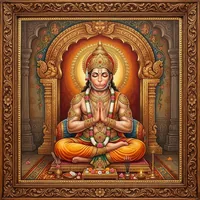
Shri Hanuman Chalisa Lyrics, Meaning & Free Printable PDF
Choose Printable A4 PDF Format (Free Vector Downloads)
Publication-grade vector PDFs with crisp Indic typography, Gita Press recension alignment, and balanced print margins for daily contemplation and temple altars.
Standard Awadhi Devanagari text with complete Dohas and Chaupais.
Traditional vermilion Lal Akshar edition for Tuesday & Saturday puja.
Standardized IAST Roman transliteration with verse-by-verse meanings.
Ultra-compact single A4 recitation sheet for daily travel and altars.
Full Telugu script (తెలుగు) with traditional meter for regional parayana.
Authentic Gujarati script (ગુજરાતી) for Salangpur Hanuman sadhana.
Complete Tamil lyrics (தமிழ்) for South Indian temple chanting.
Traditional Kannada script (ಕನ್ನಡ) for Kishkindha parayana.
Classical Anushtup metrical translation for ashrams and scholars.
पाण्डुलिपि एवं पाठ-समीक्षा (Scholarly Textual Apparatus)
Shri Ramcharitmanas & Stotra Sangraha, Gita Press Gorakhpur (Code 204 / Samvat 2080 Recension); collated with Kashiraj Trust Critical Edition (Maharaja Banaras Vidya Mandir Trust).
Sankat Mochan Temple Kashi archival folios; Tulsi Ghat 16th-century Awadhi manuscript registers; Ramanandi Sampradaya liturgical parampara.
Matrik Chhanda: Opening and closing couplets in traditional Doha meter (13+11 = 24 matras per line; caesura at 13th matra). 40 core stanzas in pure Chaupai meter (16 matras per charana, terminating in guru-guru). Classical singing tradition in Raga Bhairavi, Raga Desh, and Raga Durga.
Chaupai 6: 'shankara suvana kesarī nandana' (Gita Press standard) vs 'shankara svayaṁ kesarī nandana' (Kashiraj Trust recension emphasizing Hanuman as the direct 11th Rudra Avatara). Chaupai 38: 'jo shata bāra pāṭha kara koī' (popular recitation) vs 'yaha shata bāra pāṭha kara koī' (archival Varanasi manuscripts).
Instant Download: Hanuman Chalisa PDF
॥ प्रारंभिक दोहा (Opening Couplets) ॥
बरनउँ रघुबर बिमल जसु, जो दायकु फल चारि॥
బరణఉఁ రఘుబర బిమల జసు, జో దాయకు ఫల చారి ||
Barana'u raghubara bimala jasu, jo dāyaku phala cāri ||
Cleansing the mirror of my mind with the sacred dust of my Guru's lotus feet, I narrate the pure, unblemished glory of Shri Rama (the greatest of the Raghu dynasty), which bestows the four supreme fruits of life: Dharma (righteousness), Artha (noble wealth), Kama (wholesome aspiration), and Moksha (spiritual liberation).
बल बुधि बिद्या देहु मोहिं, हरहु कलेस बिकार॥
బల బుధి బిద్యా దేహు మోహిం, హరహు కలేస బికార ||
Bala budhi bidyā dehu mohiṁ, harahu kalesa bikāra ||
Acknowledging my mind and body to be devoid of true wisdom, I remember and meditate upon the Son of the Wind-god (Pavana-Kumara). Bestow upon me physical vitality, intellectual brilliance, and spiritual discernment, and dispel all my afflictions, griefs, and impurities.
॥ मुख्य पाठ (Sacred Verses) ॥
जय कपीस तिहुँ लोक उजागर॥
జయ కపీస తిహుఁ లోక ఉజాగర ||
Jaya kapīsa tihuṁ loka ujāgara ||
Victory to Lord Hanuman, the boundless ocean of wisdom and divine virtues. Victory to the foremost among the Vanaras, whose celestial brilliance illuminates all three realms (earthly, celestial, and subterranean).
हे ज्ञान गुन सागर हनुमान! जय। हे तिहुँ लोक उजागर कपीस! जय।
[Syntactic Order: O Hanuman, vast ocean of wisdom and virtues, victory to Thee! O Lord of monkeys who illuminates the three cosmic spheres, victory to Thee!]
अंजनि-पुत्र पवनसुत नामा॥
అంజని-పుత్ర పవనసుత నామా ||
Añjani-putra pavanasuta nāmā ||
You are the supreme envoy of Lord Rama and the repository of incomparable, limitless strength. You are revered as the illustrious son of Mother Anjani and the son of the Wind-god (Pavanasuta).
कुमति निवार सुमति के संगी॥
కుమతి నివార సుమతి కే సంగీ ||
Kumati nivāra sumati ke saṅgī ||
Great warrior of invincible valour, possessing a body as steadfast and formidable as Indra's thunderbolt (Bajrangi). You eradicate perverse intellect (kumati) and are the eternal ally and companion of noble wisdom (sumati).
कानन कुंडल कुंचित केसा॥
కానన కుండల కుంచిత కేసా ||
Kānana kuṇḍala kuñcita kesā ||
Your luminous complexion gleams like molten gold, adorned in radiant, handsome attire. Your ears are graced with sparkling earrings and your dark locks of hair are elegantly curled.
काँधे मूँज जनेऊ साजै॥
కాఁధే మూంజ జనేఊ సాజై ||
Kām̐dhe mūñja jane'ū sājai ||
In your hands rest the mighty thunderbolt and the triumphal victory banner of Dharma. Across your sacred shoulder rests the holy thread (Yajnopavita) crafted of auspicious Munja grass.
तेज प्रताप महा जग बन्दन॥
తేజ ప్రతాప మహా జగ బందన ||
Teja pratāpa mahā jaga bandana ||
You are the divine emanation of Lord Shiva (Rudra-avatara) and the delight of King Kesari. Your radiant splendor and blazing majesty are revered across the entire universe.
राम काज करिबे को आतुर॥
రామ కాజ కరిబే కో ఆతుర ||
Rāma kāja karibe ko ātura ||
You are the master of all sciences, replete with noble virtues, and exceptionally discerning. You are ever eager and devoted to executing the mission of Lord Rama.
राम लखन सीता मन बसिया॥
రామ లఖన సీతా మన బసియా ||
Rāma lakhana sītā mana basiyā ||
You relish with supreme ecstasy the sacred recounting of the Lord's deeds. Lord Rama, Lakshmana, and Mother Sita eternally abide in the temple of your heart.
बिकट रूप धरि लंक जरावा॥
బికట రూప ధరి లంక జరావా ||
Bikaṭa rūpa dhari laṅka jarāvā ||
Assuming a humble, microscopic form, you appeared before Mother Sita in the Ashoka grove. Then, assuming a colossal, terrifying manifestation, you set ablaze the golden fortress of Lanka.
रामचंद्र के काज संवारे॥
రామచంద్ర కే కాజ సంవారే ||
Rāmacandra ke kāja saṁvāre ||
Assuming a stupendous, awe-inspiring form, you vanquished the demonic legions and successfully accomplished every divine objective of Lord Ramachandra.
श्रीरघुबीर हरषि उर लाये॥
శ్రీరఘుబీర హరషి ఉర లాయే ||
Śrīraghubīra haraṣi ura lāye ||
Bringing the life-restoring Sanjivani herb across skies from Mount Dronagiri, you revived Lakshmana. Overjoyed with boundless gratitude, Lord Rama embraced you to His heart.
तुम मम प्रिय भरतहि सम भाई॥
తుమ మమ ప్రియ భరతహి సమ భాఈ ||
Tuma mama priya bharatahi sama bhā'ī ||
Lord Raghupati praised you with immense affection, declaring: 'You are as dear to Me as My beloved brother Bharata.'
अस कहि श्रीपति कंठ लगावैं॥
అస కహి శ్రీపతి కంఠ లగావైం ||
Asa kahi śrīpati kaṇṭha lagāvaiṁ ||
'May the thousand-headed cosmic serpent Sheshanaga sing your glorious praises!' Saying this, the Lord of Sri (Rama) embraced you once again.
नारद सारद सहित अहीसा॥
నారద శారద సహిత అహీసా ||
Nārada sārada sahita ahīsā ||
Sanaka and the great four Kumaras, Lord Brahma, celestial sages, Narada, Goddess Saraswati, and the king of serpents all sing of your boundless glory.
कबि कोबिद कहि सके कहाँ ते॥
కబి కోబిద కహి సకే కహాఁ తే ||
Kabi kobida kahi sake kahām̐ te ||
Yama (the lord of justice), Kubera (the lord of wealth), and the guardians of all cardinal directions cannot fully describe your greatness, how then can mortal poets and scholars find words equal to your glory?
राम मिलाय राजपद दीन्हा॥
రామ మిలాయ రాజపద దీన్హా ||
Rāma milāya rājapada dīnhā ||
You rendered immense assistance to Sugriva by uniting him with Lord Rama, thereby restoring his lost kingdom and honour.
लंकेस्वर भए सब जग जाना॥
లంకేశ్వర భయే సబ జగ జానా ||
Laṅkesvara bha'e saba jaga jānā ||
Vibhishana heeded your righteous counsel, taking refuge in Rama, and subsequently became the King of Lanka, a fact well-known across all worlds.
लील्यो ताहि मधुर फल जानू॥
లీల్యో తాహి మధుర ఫల జానూ ||
Līlyo tāhi madhura phala jānū ||
The Sun, situated millions of yojanas away across the heavens, you leaped to swallow in your childhood, perceiving it to be a sweet, ripe red fruit.
जलधि लाँघि गये अचरज नाहीं॥
జలధి లాఁఘి గయే అచరజ నాహీం ||
Jaladhi lām̐ghi gaye acaraja nāhīṁ ||
Holding the sacred ring of Lord Rama in your mouth, you vaulted across the vast ocean, truly, for one of your divine benediction (anugraha), this is no wonder.
सुगम अनुग्रह तुम्हरे तेते॥
సుగమ అనుగ్రహ తుమ్హరే తేతే ||
Sugama anugraha tumhare tete ||
Whatever difficult, seemingly insurmountable tasks exist in this world, they all become effortless and smoothly accomplished by your divine benediction (anugraha).

॥ लंका दहन, संजीवनी आनयन एवं सर्वसंकट मोचन ॥
From Chaupai 21 onwards, Goswami Tulsidas sings of Hanuman’s burning of golden Lanka, reviving Lakshmana with the celestial Sanjeevani herb, and His perpetual shield over devotees facing adversity.
होत न आज्ञा बिनु पैसारे॥
హోత న ఆజ్ఞా బిను పైసారే ||
Hota na ājñā binu paisāre ||
You are the vigilant guardian at the threshold of Lord Rama's sanctuary. No one can enter His presence without your sanction and blessing.
तुम रक्षक काहू को डर ना॥
తుమ రక్షక కాహూ కో డర నా ||
Tuma rakṣaka kāhū ko ḍara nā ||
Those who surrender to your shelter obtain all auspicious joys. When you are our protector, whom or what should we ever fear?
तीनों लोक हाँक तें काँपै॥
తీనౌం లోక హాఁక తేం కాఁపై ||
Tīnauṁ loka hām̐ka teṁ kām̐pai ||
You alone possess the capacity to control your blazing radiance and overwhelming power. All three realms tremble at the sound of your mighty roar.
महाबीर जब नाम सुनावै॥
మహాబీర జబ నామ సునావై ||
Mahābīra jaba nāma sunāvai ||
Evil spirits, phantoms, and negative energies dare not approach when the sacred name of the valiant Mahavira is chanted.
जपत निरंतर हनुमत बीरा॥
జపత నిరంతర హనుమత బీరా ||
Japata nirantara hanumata bīrā ||
All ailments are eradicated and all pains vanquished for those who continuously and devotionally chant the sacred name of brave Hanuman.
मन क्रम बचन ध्यान जो लावै॥
మన క్రమ బచన ధ్యాన జో లావై ||
Mana krama bacana dhyāna jo lāvai ||
Hanuman delivers from all adversity anyone who meditates upon him with sincere devotion in thought, action, and speech.
तिन के काज सकल तुम साजा॥
తిన కే కాజ సకల తుమ సాజా ||
Tina ke kāja sakala tuma sājā ||
Shri Rama is the sovereign ascetic King presiding over all creation; and yet you readily accomplished every noble task on His behalf.
सोई अमित जीवन फल पावै॥
సోఈ అమిత జీవన ఫల పావై ||
So'ī amita jīvana phala pāvai ||
Whatever righteous aspiration a devotee brings before you in earnest prayer, they attain that limitless fruit in this very life.
है परसिद्ध जगत उजियारा॥
హై పరసిద్ధ జగత ఉజియారా ||
Hai parasiddha jagata ujiyārā ||
Your splendour shines undiminished across all four cosmic epochs (Satya, Treta, Dvapara, and Kali Yuga); your glory is celebrated, illuminating the whole universe.
असुर निकंदन राम दुलारे॥
అసుర నికందన రామ దులారే ||
Asura nikandana rāma dulāre ||
You are the steadfast protector of saints and seekers, the destroyer of negative and demonic forces, and the beloved darling of Lord Rama.
अस बर दीन जानकी माता॥
అస బర దీన జానకీ మాతా ||
Asa bara dīna jānakī mātā ||
You are the bestower of the eight mystical powers (Ashta Siddhi) and the nine celestial treasures (Nava Nidhi) - such was the divine boon conferred upon you by Mother Janaki (Sita).
सदा रहो रघुपति के दासा॥
సదా రహో రఘుపతి కే దాసా ||
Sadā raho raghupati ke dāsā ||
You possess the supreme nectar of Rama's divine name (Rama Rasayana); may you ever remain the humble servant of Lord Raghupati.
जनम जनम के दुख बिसरावै॥
జనమ జనమ కే దుఖ బిసరావై ||
Janama janama ke dukha bisarāvai ||
Through devotion unto you, one attains Lord Rama and is liberated from the accumulated sorrows of countless lifetimes.
जहाँ जन्म हरि-भक्त कहाई॥
జహాఁ జన్మ హరి-భక్త కహాఈ ||
Jahām̐ janma hari-bhakta kahā'ī ||
At the time of departure from this mortal world, such a devotee enters the divine tradition of Lord Rama (Saket), and wherever they may take birth, they are hailed as an exalted devotee of the Lord.
हनुमत सेइ सर्ब सुख करई॥
హనుమత సేఇ సర్బ సుఖ కరఈ ||
Hanumata se'i sarba sukha kara'ī ||
Even without focusing upon other celestial deities, by simply serving and meditating upon Hanuman with one-pointed focus, one experiences all supreme bliss.
जो सुमिरै हनुमत बलबीरा॥
జో సుమిరై హనుమత బలబీరా ||
Jo sumirai hanumata balabīrā ||
All adversities are severed and every torment vanishes for the devotee who remembers and calls upon the mighty, valiant Hanuman.
कृपा करहु गुरुदेव की नाईं॥
కృపా కరహు గురుదేవ కీ నాఈం ||
Kṛpā karahu gurudeva kī nā'īṁ ||
Hail, victory, all victory to you, O Lord Hanuman! Please shower your grace upon me with the tenderness of a supreme spiritual preceptor (Gurudeva).
छूटहि बंदि महा सुख होई॥
ఛూటహి బంది మహా సుఖ హోఈ ||
Chūṭahi bandi mahā sukha ho'ī ||
Whoever recites this sacred Chalisa one hundred times with devotion is liberated from the bondage of worldly afflictions and attains transcendental philosophical bliss.
होय सिद्धि साखी गौरीसा॥
హోయ సిద్ధి సాఖీ గౌరీసా ||
Hoya siddhi sākhī gaurīsā ||
Whoever reads and recites this Hanuman Chalisa attains spiritual realization and success, as testified by Lord Shiva (Gaurisha) Himself.
कीजै नाथ हृदय महँ डेरा॥
కీజై నాథ హృదయ మహఁ డేరా ||
Kījai nātha hṛdaya mahaṁ ḍerā ||
Tulsidas remains ever the humble servant of Lord Hari; O noble Master, make your eternal dwelling within the sanctum of my heart.
॥ समापन दोहा (Concluding Couplet) ॥
राम लखन सीता सहित, हृदय बसहु सुर भूप॥
రామ లఖన సీతా సహిత, హృదయ బసహు సుర భూప ||
Rāma lakhana sītā sahita, hṛdaya basahu sura bhūpa ||
O Son of the Wind-god, dispeller of all tribulations, embodiment of all that is auspicious: along with Lord Rama, Lakshmana, and Mother Sita, please reside forever in my heart, O king among gods!
Spiritual & Philosophical Insights
Ashta Siddhi (Eight Mystical Perfections)
Anima (becoming microscopic), Mahima (becoming colossal), Garima (becoming infinitely heavy), Laghima (becoming weightless), Prapti (attaining anything at will), Prakamya (unrestricted will), Ishitva (divine lordship), and Vashitva (control over elements). As described in Chaupai 31, Mata Sita blessed Hanuman as the giver of these siddhi.
Nava Nidhi (Nine Divine Treasures)
The nine spiritual and material treasures belonging to Kubera: Padma, Mahapadma, Shankha, Makara, Kachchhapa, Mukunda, Kunda, Nila, and Kharva.
Astronomical Distance Analogy
Chaupai 18 ("Yuga sahasra yojana para bhānu") poetically calculates the distance to the Sun: 1 Yuga (12,000 celestial years) × 1,000 (sahasra) × 1 Yojana (traditionally ~8 miles) = ~96 million miles, closely approximating the earth-sun distance in traditional Indian astronomy.
Chanting Rules, Auspicious Timing & Method
Brahma Muhurta (4:00 AM to 6:00 AM) or during the evening twilight Sandhya.
Tuesday (Mangalwar) and Saturday (Shaniwar) are the most sacred days dedicated to Lord Hanuman.
Sit facing East or North on a clean woolen or cotton asana with an erect spine.
Light a lamp with pure sesame oil (til tel) or cow’s ghee. Offer red vermilion (sindoor), red hibiscus or marigold flowers, and jaggery with roasted gram (gur-chana).
Traditionally recited 1, 3, 7, or 11 times daily. Reciting 100 times (Shat-patha) is explicitly mentioned in verse 38 for complete deliverance from severe adversity.
Traditional Red Font Edition (लाल अक्षर वाली हनुमान चालीसा)
Historical & Textual Background
In the North Indian devotional tradition popularized by Gita Press Gorakhpur, the Hanuman Chalisa is traditionally printed in bold red vermilion ink (sindoor / kumkum). Red represents the planet Mars (Mangal), symbolizing courage, vital energy, and Lord Hanuman’s radiant body covered in sindoor for Lord Rama’s longevity. Temple reciters prefer large red font texts for evening recitation under dim temple lamps or oil diya illumination.
Spiritual Purpose during Tuesday & Saturday Puja
Devotees chant from the red font edition during Tuesday and Saturday twilight pujas to ward off fear, evil eye (drishti), and planetary Saturnine obstacles. The high-contrast vermilion lettering facilitates unbroken concentration during 11 or 100 recitations.
Hanuman Chalisa MP3 & Chanting Cadence Guide
The Chalisa is set to the 16-matra Chaupai meter. Each line contains four metric feet (padas) terminating in a double-long syllable (guru-guru). Traditional reciters follow classical Raga Bhairavi, Raga Desh, or folk Awadhi melodies.
Listening to high-quality vocal recitations aids correct pronunciation of Awadhi conjuncts (such as "jñāna", "bajarangī", and "kalesa"). However, traditional texts state that vocal recitation (vachika japa) produces vibrational resonance in the throat and chest, slowing respiration to 6 breaths per minute and calming the nervous system.
For morning contemplation, chant at 60 to 72 BPM. For evening chalisa recitations, a rhythm of 84 BPM sustains energetic focus.
Use our interactive Tanpura drone and rhythm metronome above to maintain acoustic pitch without distracting commercial advertisements.
Hanuman Chalisa English One Page (Compact Recitation Sheet)
A three-column single-sheet layout containing the complete two opening dohas, forty chaupais, and closing doha in standardized Roman IAST transliteration with concise English meanings.
Designed for diaspora devotees, daily train commuters, students, and home altar laminations. Fits standard A4 or US Letter paper with zero text scaling distortion.
Multi-Language Recensions: Telugu, Gujarati, Tamil, Kannada & Sanskrit
To serve the global Indian diaspora and regional temple traditions across India, Sanatana Bhakti Library publishes verified recensions in major regional scripts.
Widely chanted in Andhra Pradesh, Telangana, and Tirumala devotional congregations.
Cherished across Saurashtra and Gujarat, especially at the Salangpur Kastbhanjan Hanuman temple.
Popular among devotees visiting the Namakkal Anjaneyar and Chennai Nanganallur temples.
Deeply rooted in Karnataka devotional circles and Hampi-Kishkindha pilgrimage traditions.
Classical Anushtup metrical translation composed for Vedic reciters, ashrams, and Sanskrit scholars.
Hanuman Chalisa Book Guide: Pocket Size, Children & Commentary Editions
Pocket-Size Gutka Books (Code 204/205)
Gita Press publishes the canonical pocket-size gutka edition (Code 204 in Awadhi, Code 205 with Hindi translation). Pocket editions measure approximately 4×5 inches, making them practical for daily travel, office bags, and pilgrimages.
Hanuman Chalisa for Children
For children, choose illustrated editions with large font Devanagari and simplified word-by-word stories explaining Hanuman’s leap toward the morning sun, his devotion to Mother Sita in Ashok Vatika, and carrying Mount Dronagiri. These editions foster cultural literacy and early Sanskrit pronunciation.
Scholarly Commentaries (Bhasya)
Scholars and serious sadhakas benefit from extensive commentaries such as Swami Chinmayananda’s spiritual commentary, the Chaukhamba Sanskrit Series edition, and Jagadguru Rambhadracharya’s critical text exploring syntactic nuances.
While physical printed books belong on home altars, our digital A4 vector PDFs provide an identical Gita Press recension without printing smudges, broken binding, or commercial ad placements.
Hanuman Sadhana Companions: Aarti, Ashtak & Baan
Traditional liturgical upasana pairs the Hanuman Chalisa with companion hymns composed by Tulsidas and Sant Ramanand.
Aarti Kije Hanuman Lala Ki (आरती कीजै हनुमान लला की)
Composed by Sant Ramanand, this 14th-century Aarti is sung at twilight with a camphor flame immediately after reciting the Chalisa.
Sankat Mochan Hanuman Ashtak (संकट मोचन हनुमान अष्टक)
Eight powerful Mattagayand stanzas by Tulsidas recalling Hanuman’s past deeds to remove severe grief, illness, and planetary distress.
Shri Bajrang Baan (श्री बजरंग बाण)
A sacred oath prayer invoking Lord Rama’s name for emergency spiritual protection. Chanted strictly according to scriptural discipline.
Authentic Scriptural Merits & Blessings
Removal of Fear and Negative Energies
Chaupai 24 ("Bhoot pishach nikat nahi aavai") assures that all spectral fears and harmful influences flee at the mere utterance of Mahabir Hanuman’s name.
Healing of Chronic Afflictions
Chaupai 25 ("Nāsai rog harai sab pīrā") proclaims that continuous, devoted recitation eradicates all diseases and soothes deep-seated physical and mental pain.
Deliverance from Severe Bondage
Chaupai 38 ("Jo sat bar path kar koi, chhutahi bandi maha sukh hoi") promises that reciting one hundred times liberates the soul from worldly entrapment and bestows supreme joy.
Attainment of the Four Supreme Fruits
The opening couplet affirms the bestowal of the Purusharthas: Dharma (righteous duty), Artha (noble wealth), Kama (wholesome desire), and Moksha (spiritual liberation).
Sacred Etymology & Devotional Glossary
- Bajrangi
- Derived from Sanskrit "Vajra-Anga", meaning one whose physique is as steadfast and invulnerable as Indra’s divine thunderbolt.
- Sankat Mochan
- The revered title signifying the dispeller, redeemer, and liberator from all afflictions and planetary distress.
- Pavanasuta
- The son of Pavana (the Wind-deity), personifying supreme mastery over prana (breath) and the mind.
- Ashta Siddhi
- The eight classical yogic attainments granted to Lord Hanuman by Mother Sita as a divine boon.
- Nava Nidhi
- The nine sacred treasures of Kubera representing total material and spiritual fulfillment.
- Saket
- The supreme celestial tradition of Lord Rama, attained by dedicated devotees at the time of bodily departure.
Gita Press Gorakhpur Recension Parity & Goswami Tulsidas Orthographic Notes
Sanatana Bhakti Library maintains strict 1:1 textual fidelity with the canonical Gita Press Gorakhpur recension (Code 204). Below is the philological analysis of critical Awadhi variants collated against 16th-century Varanasi manuscripts.
Gita Press Gorakhpur reads "शंकर सुवन" (Son of Shiva). While popular reciters sometimes chant "शंकर स्वयं" (Shiva Himself as the 11th Rudra), the Shiva Purana (Shatarudra Samhita) and Valmiki Ramayana emphasize Lord Shiva imparting His divine tejas into Anjana through the Wind-god Pavana. Furthermore, in Awadhi Matrik metrics, "suvana" (three laghu syllables) ensures exact 16-matra prosodic balance terminating with Kesari Nandana.
In Goswami Tulsidas's Ramcharitmanas, Lord Rama is reverently addressed as "Tapasvi Raja" (the ascetic monarch / Rajarshi who embodies both supreme renunciation and dharmic kingship). The variant "राय सिरताजा" (Raya Sirataja) found in certain secular songbooks alters the caesura (yati) of Chaupai 27. The Gita Press standard preserves the pristine 16 matras without synthetic padding.
The word "जो" (whoever) establishes the universal, non-sectarian promise of deliverance for any devotee undertaking the 100 recitations (Shat-patha) regardless of social caste or station. "सत बार" designates 100 repetitions, which corresponds to the classical Vedic Shatarudriya anushthana count.
Awadhi phonetics employ dental "न" (na) rather than retroflex "ण" (ṇa) across the entire text (चरन, नन्दन, गुमान, जानि). Retaining genuine Awadhi orthography respects the vernacular idiom in which Goswami Tulsidas divinely composed the chalisa in Kashi.
Frequently Asked Devotional Questions
What is the best time and day to recite Hanuman Chalisa?
The most auspicious time is during Brahma Muhurta (4:00 AM to 6:00 AM) or at twilight Sandhya. Tuesdays and Saturdays are especially revered as days dedicated to Lord Hanuman for overcoming obstacles and warding off negative planetary influences.
How many times should one recite Hanuman Chalisa daily?
For daily practice, devotees typically recite the Chalisa 1, 3, or 7 times. During times of trial or for specific sankalpas, reciting it 11 times or undertaking 100 recitations (Shat-patha, as mentioned in Chaupai 38) on Tuesdays or Saturdays is deeply meritorious.
What does Chaupai 18 ("Yuga sahasra yojana para bhānu") reveal about the distance to the Sun?
Chaupai 18 states that the child Hanuman leaped toward the Sun at a distance of "Yuga Sahasra Yojana". In ancient Indian metrics, 1 Yuga (12,000) × 1 Sahasra (1,000) × 1 Yojana (8 miles) equals 96,000,000 miles, which remarkably approximates the modern astronomical average distance from Earth to the Sun (~93 to 96 million miles).
Can women recite the Hanuman Chalisa?
Yes, women can recite the Hanuman Chalisa freely with complete faith and devotion. Lord Hanuman is a loving protector who values genuine devotion (Bhakti) above ritual constraints. Maintaining personal hygiene and spiritual reverence during sadhana is all that is required.
What is the difference between Hanuman Chalisa, Bajrang Baan, and Hanuman Ashtak?
The Hanuman Chalisa is a 40-verse hymn of devotion and universal protection suitable for daily chanting. Sankat Mochan Hanuman Ashtak consists of 8 stanzas specifically recounting Hanuman's past heroic deeds to solve urgent crises. Bajrang Baan is an esoteric sankalpa oath invoking Lord Rama, recommended strictly for severe emergencies.
How can I download the free printable A4 Hanuman Chalisa PDF?
High-resolution, printable A4 vector PDFs of the Hanuman Chalisa are available for direct, free download from our PDF Library in Hindi Devanagari script, English transliteration with meanings, and Telugu script without registration.