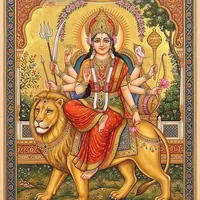
Mahishasura Mardini Stotram
Choose Printable A4 PDF Format (Free Vector Downloads)
Publication-grade vector PDFs with crisp Indic typography, Gita Press recension alignment, and balanced print margins for daily contemplation and temple altars.
Standard Awadhi Devanagari text with complete Dohas and Chaupais.
पाण्डुलिपि एवं पाठ-समीक्षा (Scholarly Textual Apparatus)
Stotra Samuchchaya, Adyar Library and Research Centre, Chennai; Gita Press Stotra Ratnavali (Code 128); attributed to Jagadguru Sri Adi Shankaracharya.
Sringeri Sharada Peetham archival palm-leaf codex (MS. SS-14); Tanjore Maharaja Serfoji's Sarasvati Mahal Library Grantha MS. 8412.
Chhanda: Custom Varnika Dandaka-variation (16-syllable undulating stanzas terminated by the resonant refrain 'jaya jaya he mahiṣāsuramardini ramyakapardini śailasute'). Classical Carnatic Raga: Raga Arabhi / Raga Revati, Adi Tala.
Verse 1: 'suravarabharṣiṇi' vs 'suravaravarṣiṇi' in certain Southern palm-leaf folios. Verse 19: 'kamaladalāmala' vs 'kamalakulāmala'.
॥ मुख्य पाठ (Sacred Verses) ॥
गिरिवरविन्ध्यशिरोऽधिनिवासिनि विष्णुविलासिनि जिष्णुनुते।
भगवति हे शितिकण्ठकुटुम्बिनि भूरिकुटुम्बिनि भूरिकृते
जय जय हे महिषासुरमर्दिनि रम्यकपर्दिनि शैलसुते॥१॥
giri-vara-vindhya-śiro'dhi-nivāsini viṣṇu-vilāsini jiṣṇu-nute |
bhagavati he śiti-kaṇṭha-kuṭumbini bhūri-kuṭumbini bhūri-kṛte
jaya jaya he mahiṣāsura-mardini ramya-kapardini śaila-sute || 1 ||
O Daughter of the Mountain, who gladdens the entire earth, who delights the universe, O Daughter of Nanda! O Goddess residing upon the lofty peaks of the Vindhya mountains, who rejoices with Lord Vishnu, praised by Indra! O Divine Mother, Consort of the blue-throated Shiva, who embraces the cosmic universe as Her vast family and performs countless benevolent deeds! Victory, all victory to You, O Slayer of the demon Mahishasura, who possesses beautiful braided locks, O Daughter of the Mountain!
त्रिभुवनपोषिणि शङ्करतोषिणि किल्बिषमोषिणि घोषरते।
दनुजनिरोषिणि दितिसुतरोषिणि दुर्मदशोषिणि सिन्धुसुते
जय जय हे महिषासुरमर्दिनि रम्यकपर्दिनि शैलसुते॥२॥
tri-bhuvana-poṣiṇi śaṅkara-toṣiṇi kilbiṣa-moṣiṇi ghoṣa-rate |
danuja-niroṣiṇi diti-suta-roṣiṇi durmada-śoṣiṇi sindhu-sute
jaya jaya he mahiṣāsura-mardini ramya-kapardini śaila-sute || 2 ||
O Showerer of divine boons upon the gods, who overcomes the unyielding, who tolerates the foul-mouthed while residing in eternal bliss! O Sustainer of the three realms, who pleases Lord Shankara, who cleanses all sins and delights in triumphant songs! O Subduer of the arrogant demons, wrathful to the sons of Diti, drying up haughty pride, O Daughter of the Ocean! Victory, all victory to You, O Slayer of Mahishasura!
शिखरि增长िनि तुङ्गहिमालयशृङ्गरिजालनिवासिनि मध्यगते।
मधुमधुरे मधुकैटभभञ्जिनि कैटभभञ्जिनि रासरते
जय जय हे महिषासुरमर्दिनि रम्यकपर्दिनि शैलसुते॥३॥
śikhari-śirāmaṇi tuṅga-himālaya-śṛṅga-nijālaya-vāsini madhya-gate |
madhu-madhure madhu-kaiṭabha-bhañjini kaiṭabha-bhañjini rāsa-rate
jaya jaya he mahiṣāsura-mardini ramya-kapardini śaila-sute || 3 ||
O Mother of the Universe, my beloved Mother, who loves dwelling in the serene Kadamba groves, radiant with a gentle smile! O Crest-jewel of the mountain summits, dwelling in Your palace atop the towering peaks of the Himalayas, seated in the center of the universe! Sweet as honey, destroyer of the demons Madhu and Kaitabha, reveling in the cosmic dance of joy! Victory, all victory to You, O Slayer of Mahishasura!
रिपुगजगण्डविदारणचण्डपराक्रमशौण्डमृगाधिपते।
निजभुजदण्डनिपातितखण्डविपातितमुण्डभटाधिपते
जय जय हे महिषासुरमर्दिनि रम्यकपर्दिनि शैलसुते॥४॥
ripu-gaja-gaṇḍa-vidāraṇa-caṇḍa-parākrama-śauṇḍa-mṛgādhipate |
nija-bhuja-daṇḍa-nipātita-khaṇḍa-vipātita-muṇḍa-bhaṭādhipate
jaya jaya he mahiṣāsura-mardini ramya-kapardini śaila-sute || 4 ||
O Mother who shattered the trunks and severed into hundreds of pieces the bodies of the formidable battle-elephants! Whose lion-mount possesses ferocious valor, tearing open the temples of enemy war-elephants! Who with Her own staff-like arms struck down the heads of demonic warrior generals! Victory, all victory to You, O Slayer of Mahishasura!
चतुरविचारधुरीणमहाशिवदूतकृतप्रमथाधिपते।
दुरितदुरीहदुराशयदुर्मतिदानवदूतकृतान्तगते
जय जय हे महिषासुरमर्दिनि रम्यकपर्दिनि शैलसुते॥५॥
catura-vicāra-dhurīṇa-mahā-śiva-dūta-kṛta-pramathādhipate |
durita-durīha-durāśaya-durmati-dānava-dūta-kṛtānta-gate
jaya jaya he mahiṣāsura-mardini ramya-kapardini śaila-sute || 5 ||
O Divine One who wields the unyielding power of all the immortals, risen for the destruction of the battle-maddened enemies! Who made Lord Shiva Himself, the master of profound wisdom and lord of Pramathas, Her messenger! Who brought about the demise of the messenger of the evil-minded demons! Victory, all victory to You, O Slayer of Mahishasura!
त्रिभुवनमस्तकशूलविरोधिकिरोधिकृताकुलदूतपदे।
धमिधमिधिक्कृतदुन्दुभिनादमहर्मुखरान्तरनादरते
जय जय हे महिषासुरमर्दिनि रम्यकपर्दिनि शैलसुते॥६॥
tri-bhuvana-mastaka-śūla-virodhi-kirodhi-kṛtākula-dūta-pade |
dhami-dhami-dhik-kṛta-dundubhi-nādam-ahar-mukharāntara-nāda-rate
jaya jaya he mahiṣāsura-mardini ramya-kapardini śaila-sute || 6 ||
O Mother whose hands grant fearlessness and boons even to the wives and valiant heroes of enemies who seek Your shelter! Whose trident, pressed against the head of the three realms, confounded the insolent emissaries of evil! Who rejoices in the resplendent, echoing sound of war drums resonating with the cadence 'Dhami-Dhami'! Victory, all victory to You, O Slayer of Mahishasura!
समरविशोषितशोणितबीजसमुद्भवशोणितबीजलते।
शिवशिवशुम्भनिशुम्भमहाहवतर्पितभूतपिशाचरते
जय जय हे महिषासुरमर्दिनि रम्यकपर्दिनि शैलसुते॥७॥
samara-viśoṣita-śoṇita-bīja-samudbhava-śoṇita-bīja-late |
śiva-śiva-śumbha-niśumbha-mahāhava-tarpita-bhūta-piśāca-rate
jaya jaya he mahiṣāsura-mardini ramya-kapardini śaila-sute || 7 ||
O Goddess who reduced the demon Dhumralochana to a hundred ashes with a single sacred sound 'Hum'! Who in battle dried up the creeping vine of blood-drops generating millions of clones of Raktabija! Who satisfied the spirits and celestial attendants in the great battle against Shumbha and Nishumbha! Victory, all victory to You, O Slayer of Mahishasura!
कनकपिशङ्गपृषत्कनिषङ्गवसद्भटशृङ्गहतावटुके।
कृतचतुरङ्गबलक्षितिरङ्गघटद्बहुरङ्गरटत्कटके
जय जय हे महिषासुरमर्दिनि रम्यकपर्दिनि शैलसुते॥८॥
kanaka-piśaṅga-pṛṣatka-niṣaṅga-vasad-bhaṭa-śṛṅga-hatā-vaṭuke |
kṛta-caturaṅga-bala-kṣiti-raṅga-ghaṭad-bahu-raṅga-raṭat-kaṭake
jaya jaya he mahiṣāsura-mardini ramya-kapardini śaila-sute || 8 ||
O Goddess whose golden bracelets flash and dance as Her limbs move dynamically in battle with Her bow strung! Whose golden quivers discharge sharp arrows that fell the foremost enemy warriors! Who transformed the battlefield into a theater of victory, crushing the fourfold armies of demons! Victory, all victory to You, O Slayer of Mahishasura!
झणझणझिञ्झिमिझिङ्कृतनूपुरशिञ्जितमोहितभूतपते।
नटितनटार्धनटीकृतनायकनाटितनाट्यरसानुरते
जय जय हे महिषासुरमर्दिनि रम्यकपर्दिनि शैलसुते॥९॥
jhaṇa-jhaṇa-jhiñjhimi-jhiṅkṛta-nūpura-śiñjita-mohita-bhūta-pate |
naṭita-naṭārdha-naṭī-kṛta-nāyaka-nāṭita-nāṭya-rasānurate
jaya jaya he mahiṣāsura-mardini ramya-kapardini śaila-sute || 9 ||
O Goddess who is praised with shouts of 'Jaya! Jaya!' by the entire universe offering prayers of victory! Whose tinkling anklets sounding 'Jhana-Jhana-Jhinjhimi' entrance Lord Shiva, the master of spirits! Who revels in the divine dance where Shiva and Shakti unite as Ardhanarishvara! Victory, all victory to You, O Slayer of Mahishasura!
श्रितरजनीरजनीरजनीरजनीरजनीकरवक्त्रवृते।
सुनयनविभ्रमरभ्रमरभ्रमरभ्रमरभ्रमराधिपते
जय जय हे महिषासुरमर्दिनि रम्यकपर्दिनि शैलसुते॥१०॥
śrita-rajanī-rajanī-rajanī-rajanī-rajanīkara-vaktra-vṛte |
sunayana-vibhramara-bhramara-bhramara-bhramara-bhramarādhipate
jaya jaya he mahiṣāsura-mardini ramya-kapardini śaila-sute || 10 ||
O Goddess endowed with captivating charm, pleasing to the pure minds of noble gods and seekers! Whose divine face outshines the radiant moon illuminating the starry night! Whose exquisite eyes flutter like bees hovering over fresh lotuses! Victory, all victory to You, O Slayer of Mahishasura!

॥ जगद्गुरु श्री आदि शंकराचार्य विरचित स्तोत्रामृतम् ॥
Composed in profound devotion and flawless classical metrical cadence by Jagadguru Sri Adi Shankaracharya, invoking divine compassion to eliminate poverty, fear, and cosmic illusion.
विरचितवल्लिकपल्लिकमल्लिकझिल्लिकभिल्लिकवर्गवृते।
शितकृतफुल्लसमुल्लसितारुणतल्लजपल्लवसल्ललिते
जय जय हे महिषासुरमर्दिनि रम्यकपर्दिनि शैलसुते॥११॥
viracita-vallika-pallika-mallika-jhillika-bhillika-varga-vṛte |
śita-kṛta-phulla-samullasitāruṇa-tallaja-pallava-sallalite
jaya jaya he mahiṣāsura-mardini ramya-kapardini śaila-sute || 11 ||
O Mother who rejoices in the heroic combat against mighty champion fighters! Who is surrounded by the tribal forest damsels, creepers, and wild jasmine blooms! Whose tender, auspicious hands and feet resemble freshly blossomed crimson lotus shoots! Victory, all victory to You, O Slayer of Mahishasura!
त्रिभुवनभूषणभूतकलानिधिरूपपयोनिधिराजसुते।
अयि सुदतीजनलालसमानसमोहनमन्मथराजसुते
जय जय हे महिषासुरमर्दिनि रम्यकपर्दिनि शैलसुते॥१२॥
tri-bhuvana-bhūṣaṇa-bhūta-kalānidhi-rūpa-payonidhi-rāja-sute |
ayi sudatī-jana-lālasa-mānasa-mohana-manmatha-rāja-sute
jaya jaya he mahiṣāsura-mardini ramya-kapardini śaila-sute || 12 ||
O Goddess who moves with the majestic grace of a royal elephant! O Ocean-born Princess (Mahalakshmi) who ornaments the three worlds with nectarous moon-like grace! O Enchantress who captivates even Kamadeva! Victory, all victory to You, O Slayer of Mahishasura!
सकलविलासकलानिलयक्रमकेलिचलत्कलहंसकुले।
अलिकुलसङ्कुलकुवलयमण्डलसस्मितमौक्तिककान्तियुते
जय जय हे महिषासुरमर्दिनि रम्यकपर्दिनि शैलसुते॥१३॥
sakala-vilāsa-kalā-nilaya-krama-keli-calat-kala-haṁsa-kule |
ali-kula-saṅkula-kuvalaya-maṇḍala-sasmita-mauktika-kānti-yute
jaya jaya he mahiṣāsura-mardini ramya-kapardini śaila-sute || 13 ||
O Mother whose spotless, tender forehead glows with the radiant beauty of a flawless lotus petal! Whose gait possesses the graceful movement of swans dwelling in the abode of all arts! Whose radiant smile shines like pearls glistening amidst dark blue lotuses! Victory, all victory to You, O Slayer of Mahishasura!
मिलितपुलिन्दमनोहरगुञ्जितरञ्जितशैलनिकुञ्जगते।
निजगुणभूतपवित्रकृतभ्रमणोन्नतसद्गुणसङ्गतये
जय जय हे महिषासुरमर्दिनि रम्यकपर्दिनि शैलसुते॥१४॥
milita-pulinda-manohara-guñjita-rañjita-śaila-nikuñja-gate |
nija-guṇa-bhūta-pavitra-kṛta-bhramaṇonnata-sad-guṇa-saṅgataye
jaya jaya he mahiṣāsura-mardini ramya-kapardini śaila-sute || 14 ||
O Goddess whose flute-like melody surpasses the sweet cooing of cuckoos! Who wanders graciously through mountain bowers adorned with the melodious hum of hill tribes! Whose divine virtues sanctify the entire creation! Victory, all victory to You, O Slayer of Mahishasura!
प्रणतसुरासुरमौलिमणिस्फुरदंशुलसन्नखचन्द्ररुचे।
जितकनकाचलमौलिमदोर्जितनिर्भरकुञ्जरकुम्भकुचे
जय जय हे महिषासुरमर्दिनि रम्यकपर्दिनि शैलसुते॥१५॥
praṇata-surāsura-mauli-maṇi-sphurad-aṁśu-lasan-nakha-candra-ruce |
jita-kanakācala-mauli-madorjita-nirbhara-kuñjara-kumbha-kuce
jaya jaya he mahiṣāsura-mardini ramya-kapardini śaila-sute || 15 ||
O Mother whose golden yellow silk garments outshine the luster of the moon! The nails of whose feet shine like radiant crescent moons, illuminated by the gems embedded in the crowns of bowing gods and demons! Victory, all victory to You, O Slayer of Mahishasura!
कृतसुरतारकसंगरतारकसङ्गरतारकसूनुनुते।
सुरथसमाधिसमानसमाधिसमाधिसमाधिसुजातरते
जय जय हे महिषासुरमर्दिनि रम्यकपर्दिनि शैलसुते॥१६॥
kṛta-sura-tāraka-saṅgara-tāraka-saṅgara-tāraka-sūnu-nute |
suratha-samādhi-samāna-samādhi-samādhi-samādhi-sujāta-rate
jaya jaya he mahiṣāsura-mardini ramya-kapardini śaila-sute || 16 ||
O Goddess praised by the sun who possesses thousands of rays, yet is outshone by Your radiant luster! Praised by Kartikeya, the leader in the battle to liberate the gods from Tarakasura! Who bestowed supreme enlightenment and boons equally upon King Suratha and the merchant Samadhi! Victory, all victory to You, O Slayer of Mahishasura!
अयि कमले कमलानिलये कमलानिलयः स कथं न भवेत्।
तव पदमेव परम्पदमित्यनुशीलयतो मम किं न शिवे
जय जय हे महिषासुरमर्दिनि रम्यकपर्दिनि शैलसुते॥१७॥
ayi kamale kamalā-nilaye kamalā-nilayaḥ sa kathaṁ na bhavet |
tava padam-eva param-padam-ity-anuśīlayato mama kiṁ na śive
jaya jaya he mahiṣāsura-mardini ramya-kapardini śaila-sute || 17 ||
O Abode of Compassion, O Auspicious Mother! He who serves Your lotus feet day after day, O Kamala (Goddess of Fortune) seated on a lotus, how could he not become the abode of fortune and wealth? And for me, who constantly contemplates Your feet as the Supreme Abode, how can auspiciousness not be granted? Victory, all victory to You, O Slayer of Mahishasura!
अयि सुमनःसुमनःसुमनःसुमनःसुमनःसुमनोहरिते।
कमलवनेऽमलकान्तिकले कलितामलकान्तिपरिकलिते
जय जय हे महिषासुरमर्दिनि रम्यकपर्दिनि शैलसुते॥१८॥
ayi sumanaḥ-sumanaḥ-sumanaḥ-sumanaḥ-sumanaḥ-sumanoharite |
kamala-vane'mala-kānti-kale kalitāmala-kānti-parikalite
jaya jaya he mahiṣāsura-mardini ramya-kapardini śaila-sute || 18 ||
O Revered Goddess, who illuminates the earth with glowing golden splendor! Who brings boundless delight to pure minds! Who dwells in lotus groves radiant with unblemished divine benediction (anugraha)! Victory, all victory to You, O Slayer of Mahishasura!
कलिकलुषं परिहृत्य नितान्तकलङ्करहितं कुरुते।
सुविमलचेतसि मञ्जुलनासिककान्तिकले ललितामृदुले
जय जय हे महिषासुरमर्दिनि रम्यकपर्दिनि शैलसुते॥१९॥
kali-kaluṣaṁ parihṛtya nitānta-kalaṅka-rahitaṁ kurute |
su-vimala-cetasi mañjula-nāsika-kānti-kale lalitā-mṛdule
jaya jaya he mahiṣāsura-mardini ramya-kapardini śaila-sute || 19 ||
O Mother who cleanses all the defilements of the Kali age from the minds of devotees, rendering them completely pure and spotless! Whose tender beauty shines in a pure heart! Victory, all victory to You, O Slayer of Mahishasura!
अयि जगतो जननी कृपयासि यथासि तथानुमितासि रमे।
यदचितमत्र भवत्युररीकुरुतादुरुतापमपाकुरुते
जय जय हे महिषासुरमर्दिनि रम्यकपर्दिनि शैलसुते॥२०॥
ayi jagato jananī kṛpayāsi yathāsi tathānumitāsi rame |
yad-ucitam-atra bhavaty-urarī-kurutād-uru-tāpam-apākurute
jaya jaya he mahiṣāsura-mardini ramya-kapardini śaila-sute || 20 ||
O Uma! Being ever-compassionate to the humble, please shower Your grace upon me! O Mother of the universe, You are the embodiment of supreme compassion! Please accept whatever worship I offer, and dispel all my deep-seated afflictions! Victory, all victory to You, O Slayer of Mahishasura!
प्रणमत्सुरासुरमौलिमणिप्रभया परिदीपितपादयुगे।
जय जय हे जगदम्ब शिवे शिवशम्भुकुटुम्बिनि पालय माम्
जय जय हे महिषासुरमर्दिनि रम्यकपर्दिनि शैलसुते॥२१॥
praṇamat-surāsura-mauli-maṇi-prabhayā paridīpita-pāda-yuge |
jaya jaya he jagad-amba śive śiva-śambhu-kuṭumbini pālaya mām
jaya jaya he mahiṣāsura-mardini ramya-kapardini śaila-sute || 21 ||
Victory, all victory to You, O Slayer of Mahishasura, with exquisitely braided locks, O Daughter of the Mountain! Whose lotus feet are illuminated by the radiant crown jewels of bowing gods and demons! Victory to You, O Mother of the Universe, O Auspicious Consort of Shiva! Please protect me always! Victory, all victory to You, O Slayer of Mahishasura!
Spiritual & Philosophical Insights
Mahishasura as the Buffalo Demon of Ego
In Shakta philosophy, Mahishasura represents stubborn ignorance, animalistic lethargy, and egotistical delusion. His buffalo form symbolizes inert tamas that refuses to surrender to divine truth until conquered by the radiant light of Durga.
The Weapons of the Devas Unified in Devi
When the gods were vanquished, their unified luminous energy (Tejas) coalesced into the Supreme Goddess. Shiva gave His trident, Vishnu His discus, Varuna His conch, and Agni His fiery spear, demonstrating that Devi is the primordial source of all cosmic power.
Mother of the Universe (Jagadamba)
Despite Her fearsome battlefield splendor, Devi is praised as Nandini (the giver of joy), affectionate to Her devotees, compassionate to the suffering, and the ultimate refuge for those seeking liberation.
Chanting Rules, Auspicious Timing & Method
Sunrise during Brahma Muhurta, or Sandhya Kaal (sunset twilight).
Fridays (Shukrawar), Ashtami, Navami, during Navratri (Chaitra and Sharadiya), and full moon nights (Purnima).
Sit facing East or North on a red or woolen asana.
Light a pure cow’s ghee or sesame oil diya. Offer red hibiscus or lotus flowers, kumkum, fragrant dhoop, and fresh pomegranate or sweets as naivedya.
Chant with bold, rhythmic clarity. Reciting the full 21 stanzas during Navratri is regarded as sovereign for breaking through seemingly impossible obstacles.
Authentic Scriptural Merits & Blessings
Destruction of Evil Energies and Negative Influences
Creates a fierce protective shield (kavacha) around the home, banishing psychic distress, dark energies, and recurring nightmares.
Fearlessness, Courage, and Dynamic Willpower
Infuses the practitioner with inner vitality (Ojas), removing procrastination, hesitation, and self-doubt in challenging life endeavors.
Victory Over Adversaries and Legal Entanglements
Bestows decisive victory over malicious rivals, false accusations, and oppressive obstacles.
Sacred Etymology & Devotional Glossary
- Aigiri Nandini
- O Daughter of the sacred mountain Himavan (Gauri / Parvati).
- Nandita Medini
- She who causes the entire earth to rejoice with auspiciousness and peace.
- Danava Vairini
- The eternal vanquisher of demonic, destructive tendencies.
- Tribhuvana Poshini
- The compassionate mother who nurtures and sustains the three realms.
Frequently Asked Devotional Questions
How many verses are there in Mahishasura Mardini Stotram?
The traditional complete hymn consists of 21 stanzas, with each stanza concluding with the triumphant sacred refrain: "जय जय हे महिषासुरमर्दिनि रम्यकपर्दिनि शैलसुते" (Jaya Jaya He Mahishasuramardini Ramyakapardini Shailasute).
What does "Jaya Jaya He Mahishasuramardini Ramyakapardini Shailasute" mean?
It translates to: "Victory, all victory to You, O Slayer of the buffalo-demon Mahishasura, O Goddess with exquisitely braided sacred hair, O Daughter of the holy Mountain!"
Can anyone chant Aigiri Nandini?
Yes. Any sincere seeker or devotee can chant or listen to Aigiri Nandini with devotion and cleanliness. It is one of the most widely recited hymns during morning prayers and Durga Puja festivities across India.