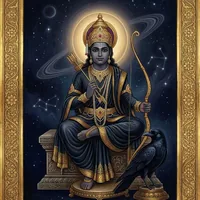
Shri Shani Chalisa
Choose Printable A4 PDF Format (Free Vector Downloads)
Publication-grade vector PDFs with crisp Indic typography, Gita Press recension alignment, and balanced print margins for daily contemplation and temple altars.
Standard Awadhi Devanagari text with complete Dohas and Chaupais.
Standardized IAST Roman transliteration with verse-by-verse meanings.
पाण्डुलिपि एवं पाठ-समीक्षा (Scholarly Textual Apparatus)
Navagraha Stotra Sangraha, Chowkhamba Vidya Bhavan, Varanasi; Shani Shingnapur Parampara.
Saurashtra Shani Upasana palm-leaf texts; Kashi Jyotisha Parishad liturgical manual.
Matrik Doha (13+11) and Chaupai (16 matras). Classical Raga: Raga Asavari / Raga Todi, pacifying Saturnine affliction.
Chaupai 3: 'kankaṭa mukha' vs 'karāla mukha' in North vs Western Indian liturgical variants.
॥ प्रारंभिक दोहा (Opening Couplets) ॥
कहत अयोध्यादास तुम, देहु अभय वरदान॥
Kahata ayodhyādāsa tuma, dehu abhaya varadāna ||
Victory unto Lord Ganesha, the noble son of Mother Parvati (Girija), the root source of all auspiciousness and supreme wisdom! Ayodhyadas humbly prays to you: bestow upon me the divine boon of absolute fearlessness.
॥ मुख्य पाठ (Sacred Verses) ॥
Hail, all hail to you, O merciful Lord Shani Dev! O compassionate one, please shower your benevolent grace upon all devotees.
Your divine four-armed form gleams with dark celestial beauty, and upon your noble forehead sits an exquisite crown studded with sparkling jewels.
Your forehead is expansive and captivating, while your gaze is profound and oblique, flanked by awe-inspiring, formidable brows.
Golden earrings gleam brilliantly upon your ears, and across your chest rests a radiant garland of rare pearls and precious gemstones.
In your hands you bear the mace (gada), the trident (trishula), and the battle-axe, annihilating demonic forces and evil instincts in an instant.
Known by the sacred names Pingala, Krishna, Chhaya-Nandana, and Yama-Konastha, you are the fierce dispeller of deep-seated human sorrows.
Whoever daily chants your ten sacred names, Sauri, Manda, and Shani, with pure vows and devotion attains your divine benediction (anugraha).
No tribulation can ever torment that devotee, for the grace of Lord Shani generates all peace, prosperity, and spiritual strength.
॥ समापन दोहा (Concluding Couplet) ॥
करत पाठ चालीस दिन, हो भवसागर पार॥
Karata pāṭha cālīsa dina, ho bhavasāgara pāra ||
This pure hymn of praise unto Lord Shanaishchara has been lovingly prepared. Whoever recites it devotedly for forty days crosses safely over the turbulent ocean of worldly existence.
Spiritual & Philosophical Insights
The Cosmic Dispenser of Karma (Karmaphala Daata)
Lord Shani does not inflict arbitrary torment; he reflects the unyielding cosmic law of Cause and Effect (Karma). His transits (Sade Sati: 7.5 years, and Dhaiya: 2.5 years) strip away ego, arrogance, and material delusions, redirecting the seeker toward introspection and selfless service.
Saffron & Blue Radiance (Nilanjana Samabhasam)
Classical Dhyana describes Shani Dev with a dark lustrous blue complexion resembling crushed antimony (Nilanjana), riding on a vulture, crow, or raven, wielding a bow, mace, and arrow, symbolizing detachment, patience, and victory over time.
The Connection with Lord Hanuman
According to the Ramayana tradition, Lord Hanuman rescued Shani Dev from Ravana’s imprisonment in Lanka. In gratitude, Shani Dev promised that those who worship Lord Hanuman with humility would never be harmed by Saturnine afflictions.
Chanting Rules, Auspicious Timing & Method
Saturday mornings during sunrise, or on Saturday evenings during the twilight Sandhya.
Every Saturday (Shaniwar), especially during Shani Amavasya and Saturn transits.
Sit on a dark blue, black, or woolen mat facing the West direction with a calm, humble mind.
Light a lamp with pure mustard oil (sarson tel) or sesame oil (til tel). Offer black sesame seeds (kale til), black urad dal, blue flowers (Aparajita), and offer unconditional service to the elderly or underprivileged.
Traditionally recited 1, 7, or 11 times every Saturday, or continuously for 40 days for intense spiritual purification.
Authentic Scriptural Merits & Blessings
Relief from Sade Sati and Dhaiya
Pacifies the intense heat of planetary transits and transforms suffering into spiritual discernment.
Dissolution of Obstacles & Delays
Clears prolonged career setbacks, legal entanglements, and persistent obstacles through disciplined perseverance.
Humility and Karmic Cleansing
Awakens moral integrity, reduces excessive pride, and protects from deceptive companions.
Sacred Etymology & Devotional Glossary
- Karmaphala Daata
- The divine dispenser who impartially delivers the harvest of one’s past thoughts, words, and actions.
- Sade Sati
- The seven-and-a-half-year astrological transit of Saturn through the 12th, 1st, and 2nd houses from the natal Moon.
- Chhaya Putra
- The illustrious son of Chhaya (Shadow) and Surya (the Sun God).
- Shanaishchara
- The slow-moving one (Shanais-chara), signifying deliberate, patient, and unhurried cosmic governance.
Frequently Asked Devotional Questions
What is the significance of reciting Shri Shani Chalisa on Saturdays?
Saturday is ruled by Lord Shani. Reciting the Shani Chalisa on this day with a mustard oil lamp and black sesame seeds pacifies negative planetary influences, purges past negative karmic residue, and grants mental endurance and focus.
Does Lord Shani punish innocent people?
No. Lord Shani is the embodiment of divine justice (Nyayadhish), not malice. He acts as an impartial mirror of cosmic law, delivering karmic lessons to burn away arrogance, cultivate humility, and elevate spiritual consciousness.
Can worshiping Lord Hanuman protect against Shani Dosha?
Yes. Puranic tradition recounts that Hanuman liberated Shani Dev from Ravana’s clutches. Consequently, Shani Dev pledged that devotees who faithfully recite the Hanuman Chalisa or worship Lord Hanuman with sincere devotion receive his benevolent protection.
How many days should Shani Chalisa be recited continuously?
The concluding couplet of the Shani Chalisa specifies that reciting it daily for forty days (Chalis Din) with deep reverence helps an earnest devotee transcend worldly tribulations and achieve peace of mind.
How can I download the printable A4 Shani Chalisa PDF?
You can download high-resolution, printable A4 vector PDFs of the Shani Chalisa free of charge from our PDF Library in Hindi Devanagari script and English transliteration with full meaning.