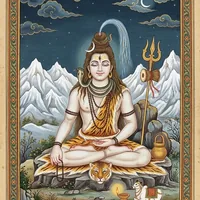
Maha Mrityunjaya Mantra
Choose Printable A4 PDF Format (Free Vector Downloads)
Publication-grade vector PDFs with crisp Indic typography, Gita Press recension alignment, and balanced print margins for daily contemplation and temple altars.
Standard Awadhi Devanagari text with complete Dohas and Chaupais.
पाण्डुलिपि एवं पाठ-समीक्षा (Scholarly Textual Apparatus)
Rigveda Samhita with Sayanacharya Bhashya, Vaidika Samshodhana Mandala, Pune (Mandala 7, Sukta 59, Rik 12); Shukla Yajurveda Samhita (Madhyandina 14.9); Taittiriya Samhita (1.8.6.i).
Bhandarkar Oriental Research Institute (BORI) Rigveda Manuscripts No. 1/1879-80; Vedic oral Padapatha and Krama recitation parampara.
Vedic Anushtup Chhanda (Rigvedic meter: 4 padas of 8 syllables each = 32 syllables). Marked with traditional Vedic Svaras (Udatta, Anudatta, Svarita). Traditional Japa: Gandhara-svara chanting.
Classical Padapatha divides 'try-ambakam' (three-eyed) vs metric reading 'tri-ambakam'. In Shukla Yajurveda 3.60, the placement of 'sugandhim' precedes 'pushtivardhanam'.
॥ मुख्य पाठ (Sacred Verses) ॥
उर्वारुकमिव बन्धनान्मृत्योर्मुक्षीय मामृतात्॥
urvārukam-iva bandhanān-mṛtyor-mukṣīya māmṛtāt ||
We worship the Three-Eyed Lord Shiva, the fragrant One who nourishes and sustains all beings! Even as a ripe cucumber is severed effortlessly from its bond to the vine, so may we be liberated from the bondage of death and worldly delusion, and never fall away from immortality and supreme truth.
उर्वारुकमिव बन्धनान्मृत्योर्मुक्षीय मामृतात् ॐ स्वः भुवः भूः ॐ सः जूं हौं ॐ॥
urvārukam-iva bandhanān-mṛtyor-mukṣīya māmṛtāt oṁ svaḥ bhuvaḥ bhūḥ oṁ saḥ jūṁ hauṁ oṁ ||
The Sanjivani Samputa Mantra: Enclosing the Maha Mrityunjaya Mantra within the primordial Beeja mantras (Haum, Joom, Sah) and Vyahritis (Bhur, Bhuvah, Svah) creates the supreme healing shield that bestows physical vitality, mental clarity, and complete spiritual invulnerability.
शूलिनं शशिसूर्याग्निनेत्रं प्रणमतो वयम्॥
śūlinaṁ śaśi-sūryāgni-netraṁ praṇamato vayam ||
We bow down before Lord Shankara, the source of supreme auspiciousness, serene and tranquil, who wears the crescent moon upon His crown, who bears the trident, and whose three divine eyes are the Moon, the Sun, and Sacred Fire.
एवमेव त्वया कार्यमस्मद्वैरिविनाशनम्॥
evam-eva tvayā kāryam-asmad-vairi-vināśanam ||
O Supreme Lord and Divine Mother of the three realms! In this very manner, please pacify all afflictions and obstacles, and eradicate all inner and outer enemies of our spiritual welfare.
जन्ममृत्युजरारोगैः पीडितं कर्मबन्धनैः॥
janma-mṛtyu-jarā-rogaiḥ pīḍitaṁ karma-bandhanaiḥ ||
O Mrityunjaya! O Great Rudra! I have taken complete refuge in You. Please protect and deliver me, afflicted as I am by the cycle of birth, death, old age, disease, and the relentless bonds of karma.
Spiritual & Philosophical Insights
Tryambaka (The Three-Eyed Lord)
Shiva’s three eyes represent the Sun (Pingala / action), the Moon (Ida / feeling), and Fire (Sushumna / transcendent spiritual wisdom). Meditating on Tryambaka awakens higher consciousness beyond duality.
Sugandhim Pushtivardhanam
Sugandhim refers to the divine fragrance of pure virtue and goodness that permeates creation. Pushtivardhanam signifies that Shiva is the nourishment of the body, mind, and soul, sustaining vitality and spiritual growth.
The Urvaruka (Cucumber) Metaphor
A cucumber stays firmly attached to the vine while growing, but when completely ripe, it separates spontaneously without struggle or stem tearing. Similarly, the devotee prays to live fully in the world and detach naturally at the appointed hour, crossing death to enter immortality (Amrita).
Chanting Rules, Auspicious Timing & Method
Brahma Muhurta (4:00 AM – 6:00 AM) or at sunrise.
Mondays (Somwar), during illness, periods of astrological stress, and on Maha Shivratri.
Sit facing East or North in Padmasana or Sukhasana with straight spine.
Offer pure water, milk, or holy water to the Shiva Linga. Light a pure ghee lamp and aromatic dhoop.
Chanted 11, 21, or 108 times using a consecrated Rudraksha mala (108 beads). Chanting in sets of 108 daily creates an impenetrable energetic armor.
Authentic Scriptural Merits & Blessings
Protection from Untimely Death (Apamrityu Haranam)
The primary traditional efficacy of the mantra is warding off sudden accidents, lethal illness, and untimely demise.
Cellular Healing and Stress Neutralization
The acoustic vibration activates parasympathetic healing, reducing acute anxiety and panic.
Moksha and Fearlessness
Dissolves the deepest subconscious fear of human existence, the fear of physical death (Abhinivesha).
Sacred Etymology & Devotional Glossary
- Tryambakam
- The Three-Eyed One; Master of past, present, and future.
- Yajamahe
- We worship, adore, and honor with selfless reverence.
- Sugandhim
- The fragrant one whose divine presence permeates all creation.
- Urvarukam
- A ripe cucumber or melon.
- Amritat
- From deathlessness, immortality, and supreme liberation.
Frequently Asked Devotional Questions
What is the full text of the Maha Mrityunjaya Mantra?
ॐ त्र्यम्बकं यजामहे सुगन्धिं पुष्टिवर्धनम्। उर्वारुकमिव बन्धनान्मृत्योर्मुक्षीय मामृतात्॥ (Om Tryambakaṁ Yajāmahe Sugandhiṁ Puṣṭi-vardhanam | Urvārukam-iva Bandhanān-mṛtyor-mukṣīya māmṛtāt ||)
Why is it called the Mrita-Sanjivani Mantra?
According to Puranic tradition, Sage Shukracharya mastered this mantra after severe penance to Lord Shiva, using its revitalizing power to heal wounded warriors and restore life force.
How many times should one chant Maha Mrityunjaya Mantra daily?
Tradition recommends 108 recitations daily using a Rudraksha mala for spiritual healing and protection. For daily prayers, 11 or 21 repetitions are widely practiced.