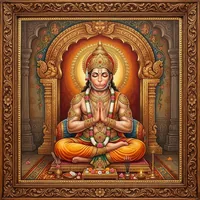
Hanuman Aarti (Aarti Kije Hanuman Lala Ki)
Choose Printable A4 PDF Format (Free Vector Downloads)
Publication-grade vector PDFs with crisp Indic typography, Gita Press recension alignment, and balanced print margins for daily contemplation and temple altars.
Standard Awadhi Devanagari text with complete Dohas and Chaupais.
पाण्डुलिपि एवं पाठ-समीक्षा (Scholarly Textual Apparatus)
Aarti Sangraha, Gita Press Gorakhpur (Code 151); attributed to Sant Ramananda (14th-15th century CE).
Ramanandi Sampradaya Math, Kashi; Ayodhya Hanumangarhi liturgical prayer collection.
Traditional Aarti Tala (Chhanta / Deepchandi, 7/14 beats). Classical Raga: Raga Yaman / Raga Bilawal.
Verse 4: 'asura samhāra' vs 'danuja samhāra' in Kashi vs Ayodhya temple recensions.
॥ मुख्य पाठ (Sacred Verses) ॥
दुष्ट दलन रघुनाथ कला की॥
Duṣṭa dalana raghunātha kalā kī ||
Perform the sacred lighted Aarti unto beloved child Hanuman, who crushes the wicked and embodies the glorious divine power of Lord Raghunatha!
रोग दोष जाके निकट न झाँकै॥
अंजनि पुत्र महा बलदाई।
संतन के प्रभु सदा सहाई॥
Roga doṣa jāke nikaṭa na jhām̐kai ||
Añjani putra mahā baladā'ī |
Santana ke prabhu sadā sahā'ī ||
At whose boundless might even colossal mountains tremble; near whom illness and negativity dare not cast a glance. He is the illustrious son of Anjani, the giver of supreme strength, and the eternal ally and protector of saints.
लंका जारि सीय सुधि लाये॥
लंका सो कोट समुद्र सी खाई।
जात पवनसुत बार न लाई॥
Laṅkā jāri sīya sudhi lāye ||
Laṅkā so koṭa samudra sī khā'ī |
Jāta pavanasuta bāra na lā'ī ||
Honoured with the sacred betel pledge (beera) by Lord Rama, he was dispatched across the ocean; he burned Lanka to ashes and brought back the auspicious news of Mother Sita. Even with Lanka fortified like an impregnable fortress encircled by an ocean moat, the son of the Wind crossed it without a moment's hesitation.
सियारामजी के काज संवारे॥
लक्ष्मण मूर्छित पड़े सकारे।
आनि सजीवन प्रान उबारे॥
Siyārāmajī ke kāja saṁvāre ||
Lakṣmaṇa mūrchita paṛe sakāre |
Āni sajīvana prāna ubāre ||
Incinerating Lanka, he vanquished demonic hordes and accomplished all sacred missions of Sita and Rama. When Lakshmana lay unconscious upon the morning battlefield, he brought the Sanjivani herb and restored his breath of life.
अहिरावन की भुजा उखारे॥
बाएँ भुजा असुर दल मारे।
दाहिने भुजा संतजन तारे॥
Ahirāvana kī bhujā ukhāre ||
Bā'em̐ bhujā asura dala māre |
Dāhine bhujā santajana tāre ||
Descending into the netherworld (Patala), he shattered the dungeons of death and tore apart the arms of Ahiravana. With his left arm he strikes down demonic armies; with his right arm he uplifts and blesses righteous seekers.
जय जय जय हनुमान उचारें॥
कंचन थार कपूर लौ छाई।
आरती करत अंजना माई॥
Jaya jaya jaya hanumāna ucāreṁ ||
Kañcana thāra kapūra lau chā'ī |
Āratī karata añjanā mā'ī ||
Gods, mortals, and sages reverently wave the sacred lamps, proclaiming 'Hail! Victory to Hanuman!' In a golden platter radiant with burning camphor flames, Mother Anjana lovingly waves the aarti around her divine son.
बसि बैकुंठ परमपद पावै॥
आरती कीजै हनुमान लला की।
दुष्ट दलन रघुनाथ कला की॥
Basi baikuṇṭha paramapada pāvai ||
Āratī kījai hanumāna lalā kī |
Duṣṭa dalana raghunātha kalā kī ||
Whoever sings this sacred aarti of Lord Hanuman attains residence in Vaikuntha and reaches the supreme spiritual destination. Perform the holy aarti unto beloved child Hanuman, the vanquisher of the wicked and effulgence of Lord Raghunatha!
Spiritual & Philosophical Insights
The Cosmic Illumination of Aarti (Deepa Aradhana)
The ritual of Aarti involves waving a sacred camphor flame in circular motions before the deity. This represents the total dissolution of the devotee’s individual ego into the supreme effulgence of the divine, as camphor burns without leaving any ash or residue.
Sant Ramanand’s Bhakti Legacy
Composed by Sant Ramanand, the pioneer of the medieval North Indian Bhakti renaissance and guru to saints like Kabir and Ravidas, this Aarti addresses Hanuman with maternal sweetness as "Lala" (beloved divine son) while celebrating his awe-inspiring heroism.
The Golden Thali of Mother Anjana
Verse 6 immortalizes Mother Anjana herself performing Aarti for her divine child with a golden platter glowing with camphor fire, bridging high epic heroism (Vira Rasa) with deep maternal affection (Vatsalya Bhava).
Chanting Rules, Auspicious Timing & Method
Evening twilight (Sandhya Kaal), immediately following the recitation of Hanuman Chalisa or Sundarkand.
Sung daily in household mandirs, with special festive singing on Tuesday and Saturday evenings.
Stand reverently holding the Aarti thali with both hands; move the flame slowly in a clockwise circular motion before the altar.
Use pure Bhimseni camphor (kapoor) or a brass deepa with five cotton wicks fueled by cow ghee. Offer red flowers, incense (dhoop), and sweet prasad (jaggery, laddoos, or batasha).
Sung once with harmonious ringing of the ghanta (bell) and rhythmic clapping, followed by receiving the sanctified flame (Aarti Lena).
Hanuman Devotional Sequence
Tradition recommends reciting the Hanuman Chalisa and Sankat Mochan Ashtak prior to the evening Aarti.
Shri Hanuman Chalisa (श्री हनुमान चालीसा)
Goswami Tulsidas’s sacred 40 verses of surrender, strength, and wisdom.
Sankat Mochan Hanuman Ashtak (संकट मोचन हनुमान अष्टक)
Poignant prayer for liberation from personal hardship, fear, and planetary distress.
Authentic Scriptural Merits & Blessings
Purification of Domestic Atmosphere
The consecrated camphor fumes and rhythmic sonic vibrations dispel lingering negativity, domestic discord, and spiritual lethargy.
Attainment of Vaikuntha & Supreme Peace
The concluding verse proclaims that whoever devoutly sings this aarti attains the blessed abode of Vaikuntha and reaches supreme spiritual peace.
Family Guardian Shield
Invokes the perpetual vigilance of Lord Hanuman over all members of the household, especially children and travelers.
Sacred Etymology & Devotional Glossary
- Aarti
- The sacred Hindu devotional ritual of waving lighted lamps before a deity while singing hymns of praise.
- Hanuman Lala
- An endearing term addressing Hanuman as the cherished, noble child of Mother Anjana and Lord Shiva.
- Kañcana Thāra
- A shining golden or brass ceremonial plate adorned with fragrant offerings, kumkum, and illuminated flames.
- Vaikuntha
- The supreme celestial tradition of eternal peace, divine communion, and absolute freedom from rebirth.
Frequently Asked Devotional Questions
Who is the author of "Aarti Kije Hanuman Lala Ki"?
This revered Aarti was composed in the 14th century by Sant Ramanand, the celebrated founder of the Ramanandi Vaishnava tradition and preceptor of legendary medieval Bhakti poet-saints.
When is the best time to perform Hanuman Aarti?
Hanuman Aarti is traditionally performed during the evening twilight (Sandhya), especially immediately after reciting the Hanuman Chalisa, Sundarkand, or Hanuman Ashtak on Tuesdays and Saturdays.
How should the Aarti plate be waved during the hymn?
The plate should be rotated in a steady clockwise circle, starting from the deity's lotus feet, rising up to the chest, circling the serene countenance, and completing the loop downwards, symbolizing the full cosmic sphere.
What offerings are traditionally placed on the Hanuman Aarti thali?
Pure Bhimseni camphor or five ghee-soaked cotton wicks, fresh red hibiscus or marigold flowers, vermilion (sindoor), a pinch of akshat (unbroken rice), and prasad such as jaggery and roasted chickpeas.
Can I download the printable A4 PDF of Hanuman Aarti?
Yes, our PDF Library provides a free, high-contrast A4 vector PDF of Aarti Kije Hanuman Lala Ki with complete Devanagari lyrics, standardized Roman transliteration, and English meanings.