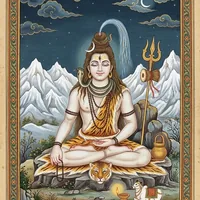
Shiv Tandav Stotram
Choose Printable A4 PDF Format (Free Vector Downloads)
Publication-grade vector PDFs with crisp Indic typography, Gita Press recension alignment, and balanced print margins for daily contemplation and temple altars.
Standard Awadhi Devanagari text with complete Dohas and Chaupais.
पाण्डुलिपि एवं पाठ-समीक्षा (Scholarly Textual Apparatus)
Shiva Stotra Ratnakara, Chowkhamba Sanskrit Series Office, Varanasi (Fascicle 42); Gita Press Shiva Stotra Sangraha (Code 252); traditional recension of Dashanana Ravana.
Kashmiri Sharada codices (Research Library Srinagar MS. 204); Sarasvati Bhavana Library Varanasi (MS. 1902); cited in classical Shaiva Agama commentaries.
Panchachamara Chhanda (पञ्चचामर छन्द - 16 syllables per pada, rhythmic gana scheme: Ja-Ra-Ja-Ra [।ऽ। ऽ।ऽ ।ऽ। ऽ।ऽ], creating the pulsating rhythm of Lord Shiva's Damaru). Classical Hindustani Raga: Raga Shankara / Raga Shivaranjani, Jhap Tala or Tintal.
Verse 1: 'dhagaddhagaddhagajjalal' (sandhi joining d+j) vs 'dhagaddhagaddhagajjvalal' (preserving jv compound). Verse 3: 'prasannatām' vs 'dhiyā natām' in Eastern recensions.
॥ मुख्य पाठ (Sacred Verses) ॥
गलेऽवलम्ब्य लम्बितां भुजङ्गतुङ्गमालिकाम्।
डमड्डमड्डमड्डमन्निनादवड्डमर्वयं
चकार चण्डताण्डवं तनोतु नः शिवः शिवम्॥१॥
gale'valambya lambitāṁ bhujaṅga-tuṅga-mālikām |
ḍamaḍ-ḍamaḍ-ḍamaḍ-ḍaman-nināda-vaḍ-ḍamarvayaṁ
cakāra caṇḍa-tāṇḍavaṁ tanotu naḥ śivaḥ śivam || 1 ||
With His neck consecrated by the flow of water cascading from the forest of His matted hair, wearing a high garland of coiled serpents hanging about His throat, and His hand-drum producing the rhythmic resonance 'Damad-Damad-Damad-Damad', Lord Shiva performs His fierce cosmic Tandava dance. May He shower auspiciousness and bliss upon us all.
विलोलवीचिवल्लरीविराजमानमूर्धनि।
धधद्धधद्धधज्ज्वलल्ललाटपट्टपावके
किशोरचन्द्रशेखरे रतिः प्रतिक्षणं मम॥२॥
vilola-vīci-vallarī-virājamāna-mūrdhani |
dhadhad-dhadhad-dhadhaj-jvalal-lalāṭa-paṭṭa-pāvake
kiśora-candra-śekhare ratiḥ pratikṣaṇaṁ mama || 2 ||
May my mind find profound love at every moment in Lord Shiva, upon whose head the celestial stream of the heavenly river surges and weaves across the cauldron of His matted locks, whose forehead blazing with fire roars with a sacred 'Dhadhad-Dhadhad' flame, and who wears the youthful crescent moon upon His crown.
स्फुरद्दिगन्तसन्ततिप्रमोदमानमानसे।
कृपाकटाक्षधोरणीनिरुद्धदुर्धरापदि
क्वचिद्दिगम्बरे मनो विनोदमेतु वस्तुनि॥३॥
sphurad-diganta-santati-pramodamāna-mānase |
kṛpā-kaṭākṣa-dhoraṇī-niruddha-durdharāpadi
kvacid-digambare mano vinodam-etu vastuni || 3 ||
May my mind rejoice in the Supreme Omnipresent Being (the Digambara, robed in the ten directions), whose mind is delighted by the playful companionship of Parvati (the daughter of the mountain king), whose glance of boundless compassion instantaneously dispels otherwise insurmountable calamities.
कदम्बकुङ्कुमद्रवप्रलिप्तदिग्वधूमुखे।
मदान्धसिन्धुरस्फुरत्त्वगुत्तरीयमेदुरे
मनो विनोदमद्भुतं बिभर्तु भूतभर्तरि॥४॥
kadamba-kuṅkuma-drava-pralipta-dig-vadhū-mukhe |
madāndha-sindhura-sphurat-tvag-uttarīya-medure
mano vinodam-adbhutaṁ bibhartu bhūta-bhartari || 4 ||
May my mind experience supreme wonder in the Lord and Sustainer of all living beings (Bhutanatha), whose locks are bathed in the reddish-gold luster radiating from the gems upon the coiled serpents' hoods, painting the faces of the quarters like liquid saffron, and whose radiant upper garment is the glistening hide of the elephant-demon.
प्रसूनधूलिधोरणीविधूसराङ्घ्रिपीठभूः।
भुजङ्गराजमालया निबद्धजाटजूटकः
श्रियै चिराय जायतां चकोरबन्धुशेखरः॥५॥
prasūna-dhūli-dhoraṇī-vidhūsarāṅghri-pīṭha-bhūḥ |
bhujaṅga-rāja-mālayā nibaddha-jāṭa-jūṭakaḥ
śriyai cirāya jāyatāṁ cakora-bandhu-śekharaḥ || 5 ||
May Lord Shiva, who wears the crescent moon upon His head, bestow everlasting prosperity upon us, He whose footstool is grayed with the pollen dust cascading from the garlands of bowing gods led by Indra, and whose matted hair is bound firmly by the king of serpents.
निपीतपञ्चसायकं नमन्निलिम्पनायकम्।
सुधामयूखलेखया विराजमानशेखरं
महाकपालिसम्पदेशिरोजटालमस्तु नः॥६॥
nipīta-pañca-sāyakaṁ naman-nilimpa-nāyakam |
sudhā-mayūkha-lekhayā virājamāna-śekharaṁ
mahā-kapāli-sampade-śiro-jaṭālam-astu naḥ || 6 ||
May the matted hair of Mahakapali bestow supreme spiritual wealth upon us, He whose forehead's blazing altar consumed the five arrows of Kamadeva, who is venerated by the celestial lords, and whose crown is illuminated by the nectarous rays of the moon.
द्धनञ्जयाहुतीकृतप्रचण्डपञ्चसायके।
धराधरेन्द्रनन्दिनीकुचाग्रचित्रपत्रक-
प्रकल्पनैकशिल्पिनि त्रिलोचने रतिर्मम॥७॥
d-dhanañjayāhutīkṛta-pracaṇḍa-pañca-sāyake |
dharā-dharendra-nandinī-kucāgra-citra-patraka-
prakalpanaika-śilpini tri-locane ratir-mama || 7 ||
May my heartfelt adoration remain steadfast in the Three-Eyed Lord (Trilocana), who offered the fierce god of lust as an oblation into the blazing fire raging on His vast forehead, and who is the sole celestial artist painting auspicious decorations upon goddess Parvati.
कुहूनिशीथिनीतमःप्रबन्धबद्धकन्धरः।
निलिम्पनिर्झरीधरस्तनोतु कृत्तिसिन्धुरः
कलानिधानबन्धुरः श्रियं जगद्धुरंधरः॥८॥
kuhū-niśīthinī-tamaḥ-prabandha-baddha-kandharaḥ |
nilimpa-nirjharī-dharas-tanotu kṛtti-sindhuraḥ
kalā-nidhāna-bandhuraḥ śriyaṁ jagad-dhuraṁ-dharaḥ || 8 ||
May the Bearer of the cosmic burden, who wears the hide of the elephant, bestow radiant prosperity upon us, He whose throat is dark like the pitch-black darkness of a new moon night obscured by storm clouds, who holds the celestial river Ganga, and whose form is adorned by the crescent moon.
वलम्बिकण्ठकन्दलीरुचिप्रबद्धकन्धरम्।
स्मरच्छिदं पुरच्छिदं भवच्छिदं मखच्छिदं
गजच्छिदान्धकच्छिदं तमन्तकच्छिदं भजे॥९॥
valambi-kaṇṭha-kandalī-ruci-prabaddha-kandharam |
smara-cchidaṁ pura-cchidaṁ bhava-cchidaṁ makha-cchidaṁ
gaja-cchid-andhaka-cchidaṁ tam-antaka-cchidaṁ bhaje || 9 ||
I worship Him whose throat glows with the deep bluish hue of a blooming blue lotus, He who vanquished Kamadeva, destroyed the three demon cities of Tripura, severed the bonds of worldly transmigration, destroyed the sacrificial pride of Daksha, slew Gajasura and Andhaka, and overpowered even Yama, the god of death.
रसप्रवाहमाधुरीविजृम्भणामधुव्रतम्।
स्मरान्तकं पुरान्तकं भवान्तकं मखान्तकं
गजान्तकान्धकान्तकं तमन्तकान्तकं भजे॥१०॥
rasa-pravāha-mādhurī-vijṛmbhaṇā-madhuvratam |
smarāntakaṁ purāntakaṁ bhavāntakaṁ makhāntakaṁ
gajāntakāndhakāntakaṁ tam-antakāntakaṁ bhaje || 10 ||
I worship Him who is the honeybee hovering in intoxicated bliss over the nectar-flow of Parvati’s auspicious virtues, He who is the end of desire, the end of the demon citadels, the destroyer of cyclical existence, the subduer of prideful sacrifices, the slayer of Gajasura and Andhaka, and the vanquisher of death itself.
द्विनिर्गमत्क्रमस्फुरत्करालभालहव्यवाट्।
धिमिद्धिमिद्धिमिध्वनन्मृदङ्गतुङ्गमङ्गल-
ध्वनिक्रमप्रवर्तितप्रचण्डताण्डवः शिवः॥११॥
d-vinirgamat-krama-sphurat-karāla-bhāla-havyavāṭ |
dhimid-dhimid-dhimid-dhvanan-mṛdaṅga-tuṅga-maṅgala-
dhvani-krama-pravartita-pracaṇḍa-tāṇḍavaḥ śivaḥ || 11 ||
Victorious is Lord Shiva, whose fierce cosmic Tandava unfolds in magnificent majesty to the deep, resonant rhythm 'Dhimid-Dhimid-Dhimid' echoing from the celestial mridangam, while the fire on His terrifying forehead blazes brightly, fanned by the fierce hissing breaths of the serpents coiling frantically about Him.
र्गरिष्ठरत्नलोष्ठयोः सुहृद्विपक्षपक्षयोः।
तृणारविन्दचक्षुषोः प्रजामहीमहेन्द्रयोः
समप्रवृत्तिकः कदा सदाशिवं भजाम्यहम्॥१२॥
gariṣṭha-ratna-loṣṭhayoḥ suhṛd-vipakṣa-pakṣayoḥ |
tṛṇāravinda-cakṣuṣoḥ prajā-mahī-mahendrayoḥ
sama-pravṛttikaḥ kadā sadāśivaṁ bhajāmy-aham || 12 ||
When shall I attain that supreme equanimity of mind where a hard stone bed and a soft cushioned couch appear the same, a venomous snake and a precious pearl necklace appear equal, a priceless gem and a lump of dirt hold no difference, a friend and an enemy are regarded alike, a blade of grass and a lotus-eyed beauty are seen with equal vision, and a common subject and an emperor are viewed without distinction? In that transcendental state of equanimity, when shall I worship Sadashiva?
विमुक्तदुर्मतिः सदा शिरःस्थमञ्जलिं वहन्।
विमुक्तलोललोचनो ललामभाललग्नकः
शिवेति मन्त्रमुच्चरन् कदा सुखी भवाम्यहम्॥१३॥
vimukta-durmatiḥ sadā śiraḥ-stham-añjaliṁ vahan |
vimukta-lola-locano lalāma-bhāla-lagnakaḥ
śiveti mantram-uccaran kadā sukhī bhavāmy-aham || 13 ||
When will I reside in a secluded cave along the banks of the celestial river Ganga, freed forever from all ill-conceived notions and worldly anxieties, holding my hands folded reverently above my head, steadying my restless eyes upon the divine forehead mark of Shiva, and chanting the supreme sacred mantra 'Shiva, Shiva' - when shall I attain that eternal, unshakeable bliss?
पठन्स्मरन्ब्रुवन्नरो विशुद्धिमेति संततम्।
हरे गुरौ सुभक्तिमाशु याति नान्यथा गतिं
विमोहनं हि देहिनां सुशङ्करस्य चिन्तनम्॥१४॥
paṭhan-smaran-bruvan-naro viśuddhim-eti santatam |
hare gurau subhaktim-āśu yāti nānyathā gatiṁ
vimohanaṁ hi dehināṁ suśaṅkarasya cintanam || 14 ||
Whosoever regularly recites, remembers, and reflects upon this peerless, supreme hymn attains perpetual inner purification. They quickly develop steadfast, steadfast devotion (ekāgra bhakti) to Lord Shiva (Hara), the Supreme Guru. There is no other path of deliverance, for contemplation upon the auspicious Lord Shankar dissolves all delusion in embodied beings.
यः शम्भुपूजनपरं पठति प्रदोषे।
तस्य स्थिरां रथगजेन्द्रतुरङ्गयुक्तां
लक्ष्मीं सदैव सुमुखीं प्रददाति शम्भुः॥१५॥
yaḥ śambhu-pūjana-paraṁ paṭhati pradoṣe |
tasya sthirāṁ ratha-gajendra-turaṅga-yuktāṁ
lakṣmīṁ sadaiva sumukhīṁ pradadāti śambhuḥ || 15 ||
He who recites this sacred song of the ten-headed Ravana dedicated to Lord Shambhu at the conclusion of worship during evening twilight (Pradosha), to him Lord Shambhu permanently bestows steadfast fortune (Lakshmi), blessed with chariots, noble elephants, and steeds, along with enduring spiritual peace and joy.
Spiritual & Philosophical Insights
The Cosmic Dance of Ananda and Rudra
Shiva’s Tandava is not merely destructive; it is the continuous cosmic pulse of creation (Srishti), preservation (Sthiti), dissolution (Samhara), illusion (Tirobhava), and ultimate liberation (Anugraha).
The River Ganga in the Matted Locks
The opening verse describes the celestial river Ganga cascading down through Shiva’s dense, forest-like matted hair (Jata), sanctifying the earth as a gentle nectar rather than an annihilating deluge.
Transformation of Ego into Surrender
Tradition recounts that when Ravana sought to lift Mount Kailash out of pride, Shiva gently pressed His toe, trapping Ravana’s hands beneath the mountain. Realizing the Supreme Majesty of Mahadeva, Ravana wept and poured forth this extraordinary hymn, transforming arrogance into pure spiritual surrender.
Chanting Rules, Auspicious Timing & Method
Brahma Muhurta (4:00 AM – 6:00 AM) or during Pradosha Kaal (sunset twilight on Trayodashi tithi).
Mondays (Somwar), Pradosh Vrata, Maha Shivratri, and during the holy month of Shravana.
Sit facing East or North on a clean wool or kusha grass asana with spine erect.
Offer pure water, raw milk, or panchamrita to the Shiva Linga. Present fresh Bilva leaves (Belpatra), white fragrant flowers, and sandalwood paste.
Recite 1 or 3 times with vigorous, clear pronunciation. Completing 11 recitations on Pradosha evening is celebrated in the hymn as the giver of sovereign wealth and inner peace.
Authentic Scriptural Merits & Blessings
Removal of Fear and Deep Melancholy
The dynamic acoustic cadence awakens the dormant Manipura (solar plexus) and Vishuddhi (throat) chakras, driving away lethargy, fear, and despondency.
Eloquence, Memory, and Magnetic Speech
Because of its intricate alliteration and rhythmic syllables, regular recitation enhances vocal projection, linguistic clarity, and poetic intelligence.
Material Prosperity and Steadfast Fortune
The concluding verse explicitly promises steady chariot, horses, elephants, and Lakshmi (sovereignty and prosperity) to those who chant it at the conclusion of worship.
Sacred Etymology & Devotional Glossary
- Jata-atavi
- The dense, forest-like thicket of Lord Shiva’s sacred matted hair.
- Damaddamad
- The onomatopoeic resonance of Shiva’s celestial hand-drum (Damaru).
- Dharadharendra Nandini
- Parvati, the daughter of the king of mountains (Himavan).
- Panchachamara
- A classical Sanskrit meter consisting of alternating short and long syllables producing an unstoppable marching cadence.
Frequently Asked Devotional Questions
Who composed the Shiv Tandav Stotram and under what circumstances?
Shiv Tandav Stotram was composed by Ravana, the king of Lanka, when his pride was shattered under Mount Kailash. Overwhelmed by Shiva’s supreme power, he fashioned a veena from his own arm and sang this hymn in spontaneous ecstatic adoration, earning Shiva’s boundless grace and the divine Chandrahas sword.
Can householders recite Shiv Tandav Stotram at home?
Yes. While vigorous in tone, Shiv Tandav Stotram is a hymn of praise (stotram), not a destructive tantric spell. Any sincere devotee with pure intentions can recite it daily at home, especially in the morning or during evening twilight (Pradosha).
What are the main spiritual benefits of chanting Shiv Tandav Stotram?
According to the Phalashruti and centuries of spiritual practice, it removes deep-rooted fears, boosts mental energy and confidence, purifies negative planetary influences, and attracts stability, eloquence, and Shiva’s divine protection.