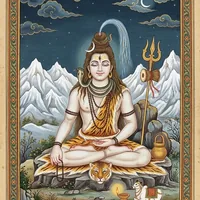
Shaiva Upasana & Rudra Aradhana Vidhi
Worship of Lord Shiva is the pinnacle of dispassion (Vairagya), silence, and cosmic awareness. The Shaiva Agamas emphasize internal purity over ornate ritualism, noting that Mahadeva is swiftly propitiated (Ashutosh) by pure water, bilva leaves, and unfeigned contemplation. Practitioners observe Monday fasts or Pradosha Vrata by maintaining a light, satvik diet and meditating in the evening twilight.
Before beginning the recitation of the Shri Shiv Chalisa or the ecstatic Shiv Tandav Stotram, one applies a Tripundra of consecrated sacred ash (bhasma) across the forehead and whispers the Panchakshara mantra (ॐ नमः शिवाय). If a Shiva Linga is present, one performs Abhisheka with clean cold water while chanting the Maha Mrityunjaya mantra, followed by the offering of unbroken three-leaf Bilva patras with the stalk facing away from the worshiper.
The Shiv Tandav Stotram, composed by King Ravana in the rolling Panchachamara meter, is chanted with energetic vocal cadence to cleanse the nervous system and conquer egoic inertia. In contrast, the Maha Mrityunjaya Mantra is recited with slow, inward breath synchronization to bestow health, overcome karmic vulnerability, and anchor the mind in the timeless consciousness of Tryambakam.
Parampara Comparison: Choosing the Right Stotra for Your Sadhana
Select the recension tailored to your current spiritual inquiry, available time, and traditional vows:
| Hymn / Recension |
Metrical Meter |
Primary Sadhana Purpose |
Recommended Cycle |
| Shri Shiv Chalisa |
Chaupai & Doha |
Gentle daily contemplation, peaceful family life, elimination of obstacles, and fulfillment of satvik wishes. |
Daily 1x or 3x on Mondays and Pradosham. |
| Shiv Tandav Stotram |
Panchachamara (Sanskrit) |
Awakening profound mental clarity, speech power, elimination of inferiority complexes, and ecstatic Shaiva devotion. |
Daily 1x at dusk or before meditation. |
| Maha Mrityunjaya Mantra |
Rigvedic Anushtup |
Protection against untimely harm, healing chronic ailments, peace of ancestors, and spiritual liberation. |
Daily 11x, 21x, or 108x with Rudraksha mala. |