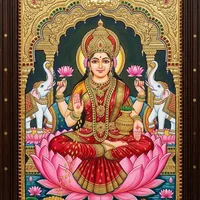
Shri Lakshmi Chalisa
Choose Printable A4 PDF Format (Free Vector Downloads)
Publication-grade vector PDFs with crisp Indic typography, Gita Press recension alignment, and balanced print margins for daily contemplation and temple altars.
Standard Awadhi Devanagari text with complete Dohas and Chaupais.
Standardized IAST Roman transliteration with verse-by-verse meanings.
पाण्डुलिपि एवं पाठ-समीक्षा (Scholarly Textual Apparatus)
Lakshmi Upasana Paddhati & Stotra Ratnavali, Gita Press Gorakhpur (Code 258); collated with Chowkhamba Shakta Stotra Sangraha.
Varanasi Lakshmi Kund temple archival prayer folios; traditional Shri Sampradaya domestic puja manuals (Samvat 1910).
Matrik Doha (13+11 matras) and Chaupai (16 matras per pada). Classical Hindustani Raga: Raga Bageshri / Raga Yaman, Dadra Tala.
Chaupai 1: 'mātu lakṣmī karahu kṛpā' vs 'māta lakṣmī kṛpā karahu' in Western Indian domestic prayer variations.
॥ प्रारंभिक दोहा (Opening Couplets) ॥
मनोकामना सिद्ध कर, पुरवहु मेरी आस॥
Manokāmanā siddha kara, puravahu merī āsa ||
O Mother Lakshmi, shower your compassionate grace and reside eternally within my heart! Fulfill all righteous aspirations and grant fulfillment to my soul’s deepest longing.
॥ मुख्य पाठ (Sacred Verses) ॥
O Daughter of the Ocean (Sindhu Suta), I meditate upon you with pure devotion; bestow upon me spiritual wisdom, intellectual clarity, and sacred knowledge.
Your divine presence pervades all cosmic realms, O revered Mother; you are celebrated across the entire universe as the supreme bestower of all auspiciousness.
Whosoever is blessed by your tender glance easily attains all righteous prosperities (Riddhi) and spiritual accomplishments (Siddhi).
The devotee who remembers you night and day is never touched by the misery of poverty or despair.
You are the beloved consort of Lord Vishnu and the loving Mother of the cosmos; you bring fulfillment to all noble undertakings and shower boundless joy.
॥ समापन दोहा (Concluding Couplet) ॥
सब जग में सुख शांति हो, देहु यही वरदान॥
Saba jaga meṁ sukha śānti ho, dehu yahī varadāna ||
Dispel all fears and eliminate all suffering; bring forth authentic joy and contentment. May all the world be established in peace, prosperity, and harmony, please grant this supreme boon!
Spiritual & Philosophical Insights
Beyond Mere Material Currency (The Ashta Lakshmi)
In Sanatana Dharma, Lakshmi does not merely represent coins or gold. She manifests as eight divine dimensions (Ashta Lakshmi): Adi Lakshmi (primordial consciousness), Dhanya (food and agriculture), Dhairya (courage in adversity), Gaja (royal dignity and strength), Santana (righteous progeny), Vijaya (victory over internal flaws), Vidya (spiritual knowledge), and Dhana (wholesome wealth).
The Divine Consort of Lord Narayana
Lakshmi resides upon the chest of Lord Vishnu (Shrinivasa). True Lakshmi only abides permanently where Narayana (righteousness, truth, and spiritual purpose) is honored; wealth uncoupled from Dharma transforms into delusion (Moha).
The Lotus Symbolism (Kamalavasini)
Sitting upon an untainted pink lotus rising above murky water, Mother Lakshmi teaches that a spiritual seeker must remain detached, pure, and luminous even while living amidst the temptations of the material world.
Chanting Rules, Auspicious Timing & Method
Friday mornings after ablutions or during Friday twilight Sandhya (Gaudhuli Bela).
Every Friday (Shukrawar), Varalakshmi Vrata, Sharad Purnima, and Deepavali Lakshmi Pujan.
Sit on a clean red, pink, or yellow asana facing the North or East direction.
Light a pure cow’s ghee lamp. Offer red lotus or rose flowers, fragrant sandalwood paste, kheer (sweet rice pudding), and fresh fruits.
Traditionally recited 1, 3, or 5 times daily on Fridays, or completed 108 times during Deepavali for supreme auspiciousness.
Authentic Scriptural Merits & Blessings
Eradication of Poverty and Debt
Alleviates financial distress and purges the debilitating shadows of poverty (Daridrata) and indebtedness.
Harmonious Family Life
Cultivates peace, warmth, mutual respect, and joy within the domestic sanctuary.
Spiritual Illumination and Nobility
Bestows inner contentment, generous charity, and clarity of intellect.
Sacred Etymology & Devotional Glossary
- Sindhu Suta
- Daughter of the Cosmic Ocean (Samudra Manthan).
- Kamalavasini
- She who dwells serenely upon the unfurling petals of the sacred lotus.
- Vishnu Priya
- The eternally cherished divine consort of Lord Vishnu.
- Ashta Lakshmi
- The eight primordial facets of auspiciousness and universal abundance.
Frequently Asked Devotional Questions
Why is Shri Lakshmi Chalisa chanted on Fridays?
Friday (Shukrawar) is dedicated to the divine feminine aspect and Mother Mahalakshmi. Chanting the Lakshmi Chalisa on Friday evenings with a ghee lamp invites divine harmony, prosperity, and blessings of righteous abundance into the home.
What is the true spiritual meaning of Lakshmi in Hindu philosophy?
Lakshmi is derived from the Sanskrit root "Lakshya", meaning the supreme goal or aim. She represents not just coins or currency, but the eightfold wealth of life: noble conduct, robust health, courage, spiritual knowledge, peaceful relationships, and righteous material resources.
How does Lakshmi Chalisa help during Diwali Puja?
During Diwali (Deepavali), Mother Lakshmi is invited into clean, illuminated homes. Reciting the Lakshmi Chalisa during Pradosh Kaal Muhurta focuses the family’s intention on inviting noble, sattvic prosperity and banishing spiritual gloom.
How can I download the printable A4 Lakshmi Chalisa PDF?
You can download the high-resolution, printable A4 vector PDF of Shri Lakshmi Chalisa completely free from our PDF Library in authentic Devanagari Hindi and English translation.