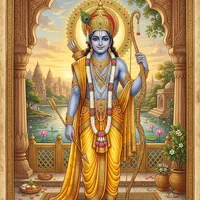
Ram Raksha Stotra
Choose Printable A4 PDF Format (Free Vector Downloads)
Publication-grade vector PDFs with crisp Indic typography, Gita Press recension alignment, and balanced print margins for daily contemplation and temple altars.
Standard Awadhi Devanagari text with complete Dohas and Chaupais.
पाण्डुलिपि एवं पाठ-समीक्षा (Scholarly Textual Apparatus)
Stotra Ratnavali, Gita Press Gorakhpur (Code 128, pp. 64–72); Anandashram Sanskrit Series No. 8, Pune; authored by Rishi Budhakaushika.
Bhandarkar Oriental Research Institute MS. 492/1884; Sarasvati Bhavana Varanasi MS. 1104; traditionally received in a vision from Lord Shiva.
Anushtup Chhanda (32 syllables per shloka, 8 syllables per pada). Classical performance in Hindustani Raga Bhupali / Raga Yaman, Dadra / Chatusra Tala.
Verse 1: 'caritaṁ raghunāthasya śatakoṭipravistaram' (unanimous across all branches). Verse 35: Southern recensions include 'rāmāya rāmabhadrāya' in the concluding mangala shlokas.
॥ मुख्य पाठ (Sacred Verses) ॥
श्रीसीतारामचन्द्रो देवता। अनुष्टुप् छन्दः।
सीता शक्तिः। श्रीमद्हनुमान् कीलकम्।
श्रीरामचन्द्रप्रीत्यर्थे जपे विनियोगः॥
śrī-sītā-rāmacandro devatā | anuṣṭup chandaḥ |
sītā śaktiḥ | śrīmad-dhanumān kīlakam |
śrī-rāmacandra-prīty-arthe jape viniyogaḥ ||
Of this sacred Ram Raksha Stotra mantra, the seer is Budha Kaushika Rishi; the presiding deity is Shri Sita-Ramachandra; the poetic meter is Anushtup; the primal divine energy is Mother Sita; the protective pin (keelaka) is Lord Hanuman; and it is chanted for the supreme delight and grace of Lord Ramachandra.
पीतं वासो वसानं नवकमलदलस्पर्थिनेत्रं प्रसन्नम्।
वामाङ्कारूढसीतामुखकमलमिलल्लोचनं नीरदाभं
नानालङ्कारदीप्तं दधतमुरुजटामण्डलं रामचन्द्रम्॥
pītaṁ vāso vasānaṁ nava-kamala-dala-spardhi-netraṁ prasannam |
vāmāṅkārūḍha-sītā-mukha-kamala-milal-locanaṁ nīradābhaṁ
nānālaṅkāra-dīptaṁ dadhatam-uru-jaṭā-maṇḍalaṁ rāmacandram ||
Let us meditate upon Lord Ramachandra, whose long arms reach down to His knees, holding bow and arrows, seated in the steady lotus posture (Padmasana), dressed in yellow silks, whose eyes rival the petals of a freshly blossomed lotus, ever serene and joyful, whose loving gaze meets the lotus face of Mother Sita seated upon His left lap, whose complexion is like a rain-bearing blue cloud, resplendent with ornaments, and wearing His matted hair bound atop His head.
एकैकमक्षरं पुंसां महापातकनाशनम्॥
ekaikam-akṣaraṁ puṁsāṁ mahā-pātaka-nāśanam ||
The divine narrative of Lord Raghunatha is vast and extends over a hundred crore verses. Each single syllable of it has the power to destroy the gravest sins of human beings.
जानकीलक्ष्मणोपेतं जटामुकुटमण्डितम्॥
jānakī-lakṣmaṇopetaṁ jaṭā-mukuṭa-maṇḍitam ||
Meditating upon Rama, who is dark like the blue water-lily, with lotus eyes, accompanied by Mother Janaki and Lakshmana, and adorned with the crown of matted locks.
स्वलीलया जगत्त्रातुमाविर्भूतमजं विभुम्॥
रामरक्षां पठेत्प्राज्ञः पापघ्नीं सर्वकामदाम्॥
sva-līlayā jagat-trātum-āvirbhūtam-ajaṁ vibhum |
rāma-rakṣāṁ paṭhet-prājñaḥ pāpa-ghnīṁ sarva-kāmadām ||
Holding sword, quiver, bow, and arrows in His hands, the destroyer of demons of darkness, who manifested by His own divine play to protect the universe, unborn and all-pervading, the wise practitioner should recite this Ram Raksha, which destroys all sins and fulfills all righteous desires.
कौसल्येयो दृशौ पातु विश्वामित्रप्रियः श्रुती॥
kausalyeyo dṛśau pātu viśvāmitra-priyaḥ śrutī ||
May Raghava protect my head; may the son of Dasharatha protect my forehead; may the son of Kausalya protect my eyes; may the beloved disciple of Vishwamitra protect my ears.
जिह्वां विद्यानिधिः पातु कण्ठं भरतवन्दितः॥
jihvāṁ vidyā-nidhiḥ pātu kaṇṭhaṁ bharata-vanditaḥ ||
May the protector of holy sacrifices protect my nose; may the affectionate elder brother of Lakshmana protect my face; may the reservoir of all wisdom protect my tongue; may He who is revered by Bharata protect my throat.
करौ सीतापत्तिः पातु हृदयं जामदग्न्यजित्॥
karau sītā-patiḥ pātu hṛdayaṁ jāmadagnya-jit ||
May the Bearer of celestial weapons protect my shoulders; may the Breaker of Shiva’s bow protect my arms; may the Lord of Sita protect my hands; may the Vanquisher of Parashurama’s pride protect my heart.
सुग्रीवेशः कटी पातु सक्थिनी हनुमत्प्रभुः॥
sugrīveśaḥ kaṭī pātu sakthinī hanumat-prabhuḥ ||
May the slayer of Khara protect my torso; may the refuge of Jambavan protect my navel; may the Lord of Sugriva protect my hips; may the master of Hanuman protect my thighs.
जङ्घे दशमुखा gear पातु पादौ विभीषणश्रीदः॥
jaṅghe daśa-mukhāntakaḥ pātu pādau vibhīṣaṇa-śrīdaḥ ||
May the highest of the Raghu race protect my legs; may the builder of the bridge to Lanka protect my knees; may the slayer of the ten-headed Ravana protect my calves; may He who granted royal sovereignty to Vibhishana protect my feet.
लोकाभिरामं श्रीरामं भूयो भूयो नमाम्यहम्॥
lokābhirāmaṁ śrī-rāmaṁ bhūyo bhūyo namāmy-aham ||
The dispeller of all calamities, the giver of all wealth and auspiciousness, the delight of all the worlds, to that Shri Rama, I bow down again and again.
वातात्मजं वानरयूथमुख्यं श्रीरामदूतं शरणं प्रपद्ये॥
vātātmajaṁ vānara-yūtha-mukhyaṁ śrī-rāma-dūtaṁ śaraṇaṁ prapadye ||
Swift as the mind, with speed equaling the celestial wind, master of all senses, foremost among the wise, son of the wind-god Vayu, supreme commander of the vanara armies, messenger of Lord Shri Rama, in Him, Lord Hanuman, I take complete shelter.
Spiritual & Philosophical Insights
The Concept of Spiritual Kavacha (Armor)
A Kavacha is an esoteric spiritual armor formed by chanting sacred vibrational syllables. As the devotee recites each verse, divine benediction (anugraha) forms an invisible aura protecting the physical and astral bodies from malevolent influences.
Given by Lord Shiva
Lord Shiva, who perpetually contemplates the two-syllable nectar "Ra-Ma", revealed this stotra to Budha Kaushika. This bridges the Shaiva and Vaishnava traditions into unified devotion.
Hanuman as the Guardian
The stotra invokes Lord Hanuman (Manojavam Maruta-Tulya-Vegam) as the eternal protector and commander of Rama’s forces, assuring that whoever chants Rama’s name is directly guarded by Hanuman.
Chanting Rules, Auspicious Timing & Method
Morning Brahma Muhurta, sunrise, or during evening Sandhya.
Ram Navami, Tuesdays, Saturdays, and daily during morning puja.
Sit facing East or North on a clean wool asana.
Place an image of Lord Rama with Sita, Lakshmana, and Hanuman. Light a pure cow’s ghee lamp and offer fresh tulsi leaves, fragrant flowers, and holy water (Gangajal).
Chant 1 or 3 times daily. Reciting it 11 times continuously consecrates holy water (Abhimantrita Jala) to drink for physical and mental healing.
Authentic Scriptural Merits & Blessings
Total Protection Against Calamities
Shields the reciter from unforeseen accidents, hostile forces, wild beasts, and malicious planetary influences.
Freedom from Chronic Diseases
Traditional lore holds that regular daily recitation cleanses physical ailments and promotes longevity (Ayu-vardhana).
Mental Peace and Victory
Destroys debilitating fear, anxiety, and nightmares, replacing them with regal dignity, courage, and tranquility.
Sacred Etymology & Devotional Glossary
- Ram Raksha
- The Divine Protection of Lord Shri Rama.
- Kavacha
- Sacred spiritual armor that shields the practitioner.
- Budha Kaushika
- The revered sage who received and recorded this hymn in a dream.
- Raghunatha
- Lord Rama, the crest-jewel of the noble Raghu dynasty.
Frequently Asked Devotional Questions
How did Budha Kaushika Rishi receive the Ram Raksha Stotra?
According to the opening verse of the text, Lord Shiva appeared to Budha Kaushika in a divine dream and recited the entire Ram Raksha Stotra. Upon waking at dawn, the sage faithfully transcribed it without losing a single syllable.
What is the most famous verse from Ram Raksha Stotra?
The most universally recited verse is the Dhyana shloka dedicated to Lord Hanuman: "मनोजवं मारुततुल्यवेगं जितेन्द्रियं बुद्धिमतां वरिष्ठम्। वातात्मजं वानरयूथमुख्यं श्रीरामदूतं शरणं प्रपद्ये॥" (Manojavaṁ Māruta-tulya-vegaṁ...)
Can Ram Raksha Stotra be chanted for someone else who is ill?
Yes. A family member can recite the Ram Raksha Stotra with a copper vessel of pure water in hand, holding the sankalpa for the ill person's recovery, and then offer that water (Charanamrita) for them to drink.