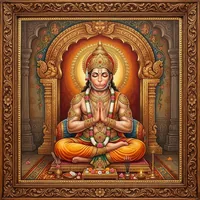
Shri Bajrang Baan
Choose Printable A4 PDF Format (Free Vector Downloads)
Publication-grade vector PDFs with crisp Indic typography, Gita Press recension alignment, and balanced print margins for daily contemplation and temple altars.
Standard Awadhi Devanagari text with complete Dohas and Chaupais.
पाण्डुलिपि एवं पाठ-समीक्षा (Scholarly Textual Apparatus)
Hanuman Bahuk & Bajrang Baan, Gita Press Gorakhpur (Code 418); Ramanandi Akhada recension, Ayodhya.
Nirmohi & Digambari Akhada liturgical codices; Kashi Sankat Mochan Math archival registers.
Tantric Matrik Chaupai and Soratha meters with resonant bija aksharas (om, hrim, shrim, kraum) and staccato rhythmic alliteration. Raga Megh / Raga Kedara.
Verse 18: Invocations of the sapatha (oath) to Shri Rama with slight line order variants between Ayodhya and Varanasi sampradayas.
॥ प्रारंभिक दोहा (Opening Couplet) ॥
तेहि के कारज सकल शुभ, सिद्ध करैं हनुमान॥
Tehi ke kāraja sakala śubha, siddha karaiṁ hanumāna ||
Whoever makes humble prayer with unwavering love, firm faith, and deep reverence, Hanuman ensures that all of that devotee's noble and righteous undertakings are triumphantly fulfilled.
॥ मुख्य पाठ (Sacred Verses) ॥
Victory to Lord Hanuman, the benevolent benefactor of saints and seekers! Please listen, O Master, to our earnest supplication.
Delay not in accomplishing the righteous work of your humble devotee! Rush swiftly forward and bestow supreme spiritual relief.
Just as you leaped across the ocean expanse and cleverly entered and emerged from Surasa’s expanding mouth with divine agility...
Advancing forward when the demoness Lankini attempted to obstruct your path, you struck her down with a righteous blow, subduing her pride...
You granted spiritual joy unto Vibhishana, and beholding Mother Sita in the Ashoka grove, attained supreme devotion.
Uprooting Ravana’s prideful orchard and hurling demonic warriors into the sea, you shattered the lethal daggers of death.
Slaying the arrogant prince Akshaya Kumara, you wrapped your celestial tail in flames and reduced Lanka’s fortresses to ash.
Lanka was incinerated like brittle lac; celebratory cheers of 'Hail! Victory!' resounded across the celestial heavens.
Why then is there any delay now, O Lord? Shower your grace upon us, O indweller of every heart!
Hail, victory to the savior of Lakshmana's breath of life! Arise swiftly and annihilate our afflictions.
Victory to Hanuman, ocean of immeasurable vitality, foremost champion empowered by all celestial divinities!
Om Hreem Hreem Hreem, O supreme Hanuman, Lord of Vanaras! Om Hum Hum Hum, strike down the demonic forces and shatter the enemies of Dharma!
May your divine intervention be true under the sacred vow of Lord Hari! O messenger of Rama, rush forward and vanquish all evil.
Hail, all victory to unfathomable Hanuman! Why should your devoted servant suffer for uncommitted guilt?
Rituals, austerities, strict vows, and sacred rules, this humble servant of yours knows none of these complexities; my sole refuge is your grace.
In dense forests, orchards, desolate roads, mountains, or at home, fortified by your strength, we fear nothing.
You are celebrated as the beloved servant of Mother Sita (Janakasuta) and Lord Hari; by that sacred oath, delay not a single moment!
The skies reverberate with shouts of 'Jaya! Jaya! Jaya!'; by remembering your sacred name, unbearable afflictions are instantaneously erased.
Clasping your holy feet with folded hands I pray, at this critical hour, whom else shall I call upon?
Arise, arise and advance in the name and invocation of Lord Rama! I prostrate at your feet with folded hands in earnest prayer.
॥ समापन दोहा (Concluding Couplet) ॥
भव बंधन ते मुक्ति दे, प्रगटहु दीनदयाल॥
Bhava bandhana te mukti de, pragaṭahu dīnadayāla ||
Be pleased in your heart, O leader of the Vanaras, and grant auspicious peace at all times! Liberate us from worldly bondage, O compassionate protector of the humble!
Spiritual & Philosophical Insights
The Thunderbolt Arrow (Vajra Baan)
Shri Bajrang Baan is revered as an infallible spiritual missile. By deploying potent Beej Aksharas (such as Aim, Hreem, Kleem, Hrum) and sacred oaths in the name of Lord Rama, it creates an impenetrable armor against severe negative influences.
The Solemn Rama Oath (Shapath) & Sacred Safeguards
Traditional spiritual authorities emphasize that Bajrang Baan should never be chanted out of ego, malice, or petty material desires. The text invokes the sacred name and honor of Shri Rama, compelling Hanuman by his divine fidelity; hence, complete physical and ethical purity is required.
Synthesis of Bhakti and Agamic Protection
While deeply rooted in devotion to Rama, the hymn incorporates protective syllables derived from Tantric and Agamic traditions, designed to banish persistent psychological terror, witchcraft (abhichara), and spectral afflictions.
Chanting Rules, Auspicious Timing & Method
Early morning Brahma Muhurta (4:00 AM to 6:00 AM) or night Sandhya during periods of acute distress.
Tuesdays and Saturdays, or during Hanuman Jayanti, solar/lunar eclipses, and Navaratri.
Sit on a red woolen mat facing East (for spiritual clarity) or North (for obstacle destruction), maintaining strict brahmacharya and bodily cleanliness.
Light a deep lamp with pure sesame oil (til tel) or cow ghee. Offer red vermilion (sindoor), red flowers, whole cloves (laung), and sweet batashas.
Traditionally chanted 1, 7, or 11 times. In circumstances of severe crisis, an anushthana of 11 recitations daily for 21 days is observed with complete reverence.
Authentic Scriptural Merits & Blessings
Neutralization of Occult & Negative Energies
Completely dissolves persistent negative vibrations, evil eye (drishti), spectral harassment, and deep-seated fears.
Invincible Shield in Severe Crises
Provides an impenetrable spiritual shield during acute legal entanglements, life-threatening dangers, and severe family distress.
Restoration of Inner Courage & Peace
Eradicates chronic panic, recurring nightmares, and debilitating inertia, restoring resolute fearlessness.
Sacred Etymology & Devotional Glossary
- Bajrang Baan
- The invincible thunderbolt-arrow of Lord Bajrangbali (Hanuman).
- Shapath
- A sacred, binding oath invoked upon Lord Rama to compel immediate divine protection.
- Beej Akshara
- Concentrated sonic seed syllables (such as Aim, Hreem, Kleem, Hrum) endowed with immense spiritual potency.
- Bhoota-Preta
- Astral entities and negative energies that cannot endure the radiant presence of Lord Hanuman.
Frequently Asked Devotional Questions
How is Bajrang Baan different from Hanuman Chalisa?
Hanuman Chalisa is a serene, universally applicable forty-verse song praising Hanuman’s divine attributes for daily worship. Bajrang Baan is an urgent, highly focused protective hymn incorporating seed mantras and binding oaths on Lord Rama, intended specifically for overcoming acute distress and negative afflictions.
Is it permissible to recite Bajrang Baan at home?
Yes, provided the devotee observes physical cleanliness, a sattvic vegetarian diet, truthful conduct, and avoids reciting it for malicious, selfish, or harmful purposes. Reverence and purity ensure its benevolent protective power.
Why does Bajrang Baan invoke the oath of Lord Rama?
Lord Hanuman is the supreme servant of Lord Rama and cannot disregard an appeal bound by his Master’s sacred name. The author Goswami Tulsidas included these oaths to guarantee immediate divine intervention when a devotee faces existential crisis.
How many times should Bajrang Baan be recited daily?
For regular spiritual protection, chanting it once or three times on Tuesdays and Saturdays is customary. During intense tribulations, devotees traditionally undertake 7 or 11 recitations daily for 21 or 40 days with a solemn sankalpa.
Where can I download the authentic Bajrang Baan printable PDF?
A free, high-resolution printable A4 vector PDF of Shri Bajrang Baan with authentic Awadhi Devanagari text, Roman transliteration, and English meanings is available for download in our PDF Library.