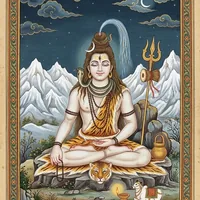
Shri Shiv Chalisa
Choose Printable A4 PDF Format (Free Vector Downloads)
Publication-grade vector PDFs with crisp Indic typography, Gita Press recension alignment, and balanced print margins for daily contemplation and temple altars.
Standard Awadhi Devanagari text with complete Dohas and Chaupais.
पाण्डुलिपि एवं पाठ-समीक्षा (Scholarly Textual Apparatus)
Shiva Stotra Sangraha, Gita Press Gorakhpur; attributed to Ayodhya Das; collated with Kashi Vishwanath Temple recension.
Ayodhya Ramjanmabhumi-Kanak Bhawan Shaiva-Vaishnava harmonized hymnal manuscripts (Samvat 1890).
Matrik Doha and Chaupai (16 matras per hemistich). Traditional rendering in Raga Shivaranjani or Raga Bhairav.
Chaupai 14: 'brahmā viṣṇu maheśa' vs 'vidhi hari hara' in Eastern UP oral variants.
॥ प्रारंभिक दोहा (Opening Couplet) ॥
कहत अयोध्यादास तुम, देहु अभय वरदान॥
Kahata ayodhyādāsa tuma, dehu abhaya varadāna ||
Victory to Lord Ganesha, the illustrious son of Mother Girija (Parvati), the fountainhead of all auspiciousness and supreme wisdom! Ayodhya Das prays: please bestow upon me the divine boon of fearlessness.
॥ मुख्य पाठ (Sacred Verses) ॥
Victory to the Lord of Girija, the merciful protector of the humble! You eternally shelter, nurture, and preserve the seekers of truth.
Upon your forehead the cool crescent moon gleams charmingly, while in your ears swing earrings shaped of serpents' hoods.
Your fair complexion shines like camphor, while the celestial river Ganga cascades from your matted locks. A garland of skulls rests upon your chest and your sacred body is smeared with holy ash.
You are dressed in an auspicious tiger-skin (Vyaghrambara); beholding your divine beauty, celestial serpents and ascetic sages are filled with wonder.
The beloved daughter of Queen Mena (Mother Parvati) sits gracefully upon your left side, presenting an incomparable vision of Shiva-Shakti union.
In your hand rests the pure, gleaming Trident (Trishula), which eternally annihilates demonic and negative forces.
Nandi the divine bull and Lord Ganesha shine beside you like resplendent lotus blossoms blooming in the midst of an ocean.
Beside you stand Lord Kartikeya and your attendant hosts (Ganas); words fail to capture the transcendent beauty of this celestial assembly.
Whenever the gods went to you in distress with prayers, at that very moment, O Lord, you took charge and resolved their crisis.
When the demon Tarakasura created intolerable oppression across the cosmos, all the gods gathered and bowed before you in prayer.
You immediately dispatched the six-faced Kartikeya (Shadanana), who in the twinkling of an eye vanquished Tarakasura.
You annihilated the tyrannical demon Jalandhara; your glorious renown is celebrated throughout the world.
Engaging in combat against Tripurasura, you destroyed his flying fortresses with a single arrow and graciously saved creation.
You humbled the arrogant thousand-armed Banasura, severed his excessive arms, and yet protected his life out of mercy.
When King Bhagiratha performed peerless austerities, you received the torrential descent of the Ganges in your locks to save the earth.
Releasing her waters in gentle streams, every drop of Mother Ganga purifies the sins of countless lifetimes.
Upon your forehead shines the crescent moon; gazing upon your sublime form, celestial beings and ascetics are humbled in reverence.
Directing the sacred Ganges through your matted locks, all three realms experienced immense peace and auspicious bliss.
Adorned with an imposing garland of skulls, the sight of your sovereign cosmic form causes even Yama, Lord of Death, to tremble.
Awakening the mystical Kundalini energy within seekers, you bestow the eight perfections upon pure, selfless devotees.
॥ समापन दोहा (Concluding Couplet) ॥
तुम मेरी मनकामना, पूर्ण करो जगदीश॥
मगसिर छठि हेमन्त ऋतु, संवत चौसठ जान।
अस्तुति चालीसा शिवहि, पूर्ण कीन कल्यान॥
Tuma merī manakāmanā, pūrṇa karo jagadīśa ||
Magasira chaṭhi hemanta ṛtu, saṁvata causaṭha jāna |
Astuti cālīsā śivahi, pūrṇa kīna kalyāna ||
Whoever with daily regularity recites this Chalisa in the morning, may the Sovereign of the Cosmos fulfill all their wholesome prayers! In the month of Margashirsha on the sixth day of winter, this auspicious hymn of forty verses in praise of Lord Shiva is joyfully concluded.
Spiritual & Philosophical Insights
Ashutosh & Bholenath (The Easily Pleased)
Lord Shiva is celebrated as Ashutosh, one who is quickly propitiated through pure intent, a drop of water, or a single bilva leaf. He looks beyond ritual grandeur to the sincerity of the devotee.
Nilakantha (The Blue-Throated Redeemer)
During the churning of the cosmic ocean (Samudra Manthan), Shiva swallowed the deadly Halahala poison to save all creation from destruction, holding it in His throat, symbolizing the saintly virtue of absorbing negativity to preserve peace.
The Cosmic Destroyer of Ego
Shiva’s dance (Tandava) and third eye represent the dissolution of spiritual ignorance (Avidya) and the burning away of the false self.
Chanting Rules, Auspicious Timing & Method
Early morning Brahma Muhurta or during Pradosha Kaal (twilight sunset on Trayodashi).
Mondays (Somwar), Pradosh Vrata, Masik Shivratri, Maha Shivratri, and throughout the month of Shravana.
Sit facing North or East on a white or woolen asana.
Offer water or raw milk to the Shiva Linga. Present fresh Bilva leaves (Belpatra), white sandalwood paste, white flowers, and sacred ash (Bhasma/Vibhuti). Light a pure cow’s ghee lamp.
Chanted 1, 3, or 11 times. Reciting the sacred Panchakshari mantra "Om Namah Shivaya" 108 times before or after is deeply auspicious.
Authentic Scriptural Merits & Blessings
Mental Peace and Freedom from Anxiety
Calms turbulent thought patterns, destroys deep grief, and brings unwavering emotional serenity.
Purification from Negative Karma
Cleanses accumulated sins and purifies the subconscious mind.
Spiritual Liberation (Moksha)
Awakens detachment, devotion, and alignment with transcendent Shiva-consciousness.
Sacred Etymology & Devotional Glossary
- Mahadeva
- The Supreme God beyond worldly categories and forms.
- Bholenath
- The simple, innocent, and trusting Lord who gives all to His devotees without hesitation.
- Bilva Patra
- The trifoliate leaf symbolizing the three gunas (Sattva, Rajas, Tamas) and the three eyes of Shiva.
- Nilakantha
- The blue-throated Lord who consumed the cosmic poison for the welfare of all beings.
Frequently Asked Devotional Questions
Why is Monday (Somwar) special for reciting Shiv Chalisa?
Monday is associated with Chandra (the Moon), which rests upon Lord Shiva's forehead (Chandrashekhara). Reciting Shiv Chalisa on Mondays calms the mind, pacifies planetary stress, and attracts the benevolent grace of Mahadeva.
What is the significance of offering Bilva leaves while chanting?
The three petals of the Bilva leaf represent the three Gunas (Sattva, Rajas, Tamas), the three eyes of Shiva, and the Holy Trinity (Brahma, Vishnu, Shiva). Offering a bilva leaf during prayer symbolizes offering one’s entire mind and ego to the Lord.
How can I download the free printable Shiv Chalisa PDF?
You can download the high-resolution, printable A4 vector PDF of Shri Shiv Chalisa completely free from our PDF Library in clear Hindi Devanagari script with all couplets and quatrains.