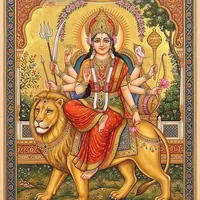
Durga Saptashati (Devi Mahatmya) Guide
Choose Printable A4 PDF Format (Free Vector Downloads)
Publication-grade vector PDFs with crisp Indic typography, Gita Press recension alignment, and balanced print margins for daily contemplation and temple altars.
Complete verified devotional text.
पाण्डुलिपि एवं पाठ-समीक्षा (Scholarly Textual Apparatus)
Devi Mahatmyam (Durga Saptashati), Gita Press Gorakhpur (Code 118); Chowkhamba Sanskrit Series Office, ed. Pt. Harikrishna Sharma.
Markandeya Purana chapters 81–93; Asiatic Society of Bengal MS. 4112; 12th-century Newari manuscript in Nepal National Archives (dated 1198 CE).
Predominantly classical Anushtup Chhanda (32 syllables), punctuated by ornate meters (Trishtubh, Jagati, Upajati) in the divine praise of Shakradi Stuti (Chapter 4) and Narayani Stuti (Chapter 11). Chanted in Classical Raga Durga / Raga Malkauns.
Gaudiya recension (700 verses with separate Damara and Kilaka) vs South Indian recension (incorporating Navakshari Nyasa and Chandi Vidhana).
॥ मुख्य पाठ (Sacred Verses) ॥
शरण्ये त्र्यम्बके गौरि नारायणि नमोऽस्तु ते॥
Śaraṇye tryambake gauri nārāyaṇi namo'stu te ||
O auspiciousness of all that is auspicious, O all-benevolent consort of Lord Shiva, fulfiller of all righteous purposes, O refuge of all worlds, O three-eyed Gauri, O Divine Narayani, salutations and reverent homage unto You!
एवमेव त्वया कार्यमस्मद्वैरिविनाशनम्॥
Evameva tvayā kāryamasmadvairivināśanam ||
O Supreme Sovereign Ruler of all the three worlds! May You forever pacify and extinguish all our afflictions and obstacles, and similarly destroy all demonic and destructive adversities!
स्वस्थैः स्मृता मतिमतीव शुभां ददासि॥
दारिद्र्यदुःखभयहारिणि का त्वदन्या।
सर्वोपकारकरणाय सदार्द्रचित्ता॥
Svasthaiḥ smṛtā matimatīva śubhāṁ dadāsi ||
Dāridryaduḥkhabhayahāriṇi kā tvadanyā |
Sarvopakārakaraṇāya sadārdracittā ||
O Mother Durga, remembered in moments of peril, You banish the dread and fear of every living being; remembered by those in serene tranquility, You bestow an exceedingly pure, noble intellect. O dispeller of poverty, suffering, and fear, who other than You possesses a heart ever compassionate and overflowing to bestow grace upon all?
नमस्तस्यै नमस्तस्यै नमस्तस्यै नमो नमः॥
Namastasyai namastasyai namastasyai namo namaḥ ||
To that Supreme Goddess who abides in all living beings in the form of the loving Mother, salutations unto Her, salutations unto Her, salutations, repeatedly salutations unto Her!
The Supreme Navarna Mahamantra: Om, the primordial vibration; Aim, the seed of Mahasaraswati (divine knowledge); Hreem, the seed of Mahalakshmi (cosmic abundance); Kleem, the seed of Mahakali (dissolution of ego); Chamundayai, unto the vanquisher of darkness; Vicce, grant liberation and sever all karmic knots!
Spiritual & Philosophical Insights
The Three Primordial Charitras (Gunas & Goddesses)
The 700 verses are divided into three cosmic episodes: 1) Prathama Charitra (Chapter 1) presided over by Mahakali (tamoguna), depicting the destruction of demons Madhu and Kaitabha; 2) Madhyama Charitra (Chapters 2–4) presided over by Mahalakshmi (rajoguna), detailing the emergence of Durga from the combined lustre of the gods to slay Mahishasura; and 3) Uttama Charitra (Chapters 5–13) presided over by Mahasaraswati (sattvaguna), culminating in the defeat of Shumbha and Nishumbha and the sacred Narayani Stuti.
Suratha and Samadhi: The Allegory of Spiritual Seeking
King Suratha, betrayed by his ministers and deprived of his kingdom, and Samadhi, a wealthy merchant cast out by his ungrateful family, meet in the hermitage of Sage Medhas. Both are bewildered by their persistent worldly attachment despite being betrayed. The Sage reveals that this bewilderment is Maha Maya (the Great Illusion) which veils true wisdom, and guides them to worship the Supreme Mother for sovereignty and spiritual liberation.
The 700 Mantra Matrix (Saptashati)
Unlike ordinary narrative poetry, every single word and dialogue in the Saptashati is treated in Shakta Agama as an empowered, acoustic vibration (Samputa Mantra). Reciting it with proper pronunciation, breath control, and ritual purity awakens latent spiritual strength.
Structure & Three Cosmic Episodes (Charitras)
Prathama Charitra (First Episode - Chapter 1)
Presided over by Mahakali (tamoguna), depicting the destruction of demons Madhu and Kaitabha, illustrating the transcendence of lethargy and delusion.
Madhyama Charitra (Middle Episode - Chapters 2–4)
Presided over by Mahalakshmi (rajoguna), detailing the emergence of the Goddess from the collective lustre of all divinities and the epic slaying of Mahishasura.
Uttama Charitra (Final Episode - Chapters 5–13)
Presided over by Mahasaraswati (sattvaguna), recounting the destruction of Dhumralochana, Chanda, Munda, Raktabija, and the tyrant brothers Shumbha and Nishumbha, concluding with the divine hymns of praise (Narayani Stuti).
Recitation Sequence & Essential Angas
Preliminary Invocations (Purva Anga)
Devi Kavacham (armour of protection), Argala Stotram (unlocking divine benediction (anugraha)), Kilaka Stotram (removing the mystical pin), and the Navarna Mantra Japa (Om Aim Hreem Kleem Chamundayai Viche).
Main Chandi Recitation
The 13 chapters chanted with dedicated devotion, accurate Sanskrit enunciation, and continuous ghee lamps.
Concluding Prayers (Uttara Anga)
Devi Suktam (Rigvedic hymn), Aparadha Kshamapana Stotram (seeking forgiveness for faults in pronunciation), and Aarti.
Chanting Rules, Auspicious Timing & Method
Brahma Muhurta (4:00 AM to 6:00 AM) and sunrise, especially during the nine sacred nights of Chaitra and Sharadiya Navaratri.
All nine days of Navaratri, as well as Ashtami, Navami, and Chaturdashi tithis of Shukla Paksha each lunar month.
Sit on a clean red woolen asana facing East or North with an Akhanda Deepa (unbroken ghee lamp) burning near the altar.
Red silk cloth, red hibiscus flowers (Jaba kusum), vermilion (kumkum), betel leaves (paan), cloves, camphor, and kheer/halwa bhoga.
Traditionally chanted in the 9-day Navaha Parayana sequence (one reading per day) or the 3-day Trayaha sequence, accompanied by preliminary angas (Kavacham, Argala, Kilaka) and Navarna Mantra japa.
Authentic Scriptural Merits & Blessings
Total Eradication of Calamities and Hostilities
Chapter 12 (Phalastuti) guarantees that in whichever home the Saptashati is devoutly chanted or listened to, pestilence, sudden misfortunes, and hostile forces are dispelled.
Invincible Spiritual & Psychological Fortitude
Eradicates deep-rooted fear, anxiety, depression, and planetary distress, awakening radiant fearlessness and mental clarity.
Attainment of Righteous Abundance & Liberation
Bestows ethical prosperity, worldly victory, and ultimate self-knowledge, just as King Suratha regained his throne and Samadhi attained supreme enlightenment.
Sacred Etymology & Devotional Glossary
- Saptashati
- Exactly seven hundred sacred verses (Sapta = seven, Shata = hundred) composing the Devi Mahatmya.
- Charitra
- A grand cosmic narrative episode detailing the manifestation and divine triumphs of the Goddess.
- Navarna Mantra
- The supreme nine-syllable root mantra (Om Aim Hreem Kleem Chamundayai Viche) embodying the three powers of wisdom, abundance, and dissolution.
- Narayani Stuti
- The sublime hymn sung by the grateful gods in Chapter 11 praising the Mother as the indwelling soul of all creation.
Frequently Asked Devotional Questions
What is Durga Saptashati and where does it originate?
Durga Saptashati (also known as Devi Mahatmya or Sri Chandi) is an ancient 700-verse scripture found within chapters 81 to 93 of the Markandeya Purana, describing the glorious victories of Goddess Durga over demonic forces and egoic delusion.
How many chapters and episodes are in Durga Saptashati?
The text contains exactly 13 chapters organized into three great episodes (Charitras): Prathama Charitra (Chapter 1, Mahakali), Madhyama Charitra (Chapters 2–4, Mahalakshmi), and Uttama Charitra (Chapters 5–13, Mahasaraswati).
How should Durga Saptashati be read during Navaratri?
The classic nine-day Navaha Parayana sequence is: Day 1 (Chapter 1), Day 2 (Chapters 2–3), Day 3 (Chapter 4), Day 4 (Chapters 5–8), Day 5 (Chapters 9–10), Day 6 (Chapter 11), Day 7 (Chapter 12), Day 8 (Chapter 13), and Day 9 (Havan, Kanya Puja, and Kshama Prarthana).
What are the three essential preliminary prayers (Purva Angas)?
Before chanting the main chapters, tradition requires reciting the three limbs: Devi Kavacham (divine armor of protection), Argala Stotram (unlocking divine benediction (anugraha)), and Kilaka Stotram (removing the spiritual seal), followed by the Navarna Mantra.
Can I download a printable PDF study guide of Durga Saptashati?
Yes, our PDF Library provides a free, high-contrast printable A4 vector PDF outlining the 13 chapters, core devotional mantras, and Navaratri recitation rules.